If you're a San Francisco senior wondering whether any of the new devices out there are actually worth the trouble, you're asking the right question. The trick is knowing which small pieces of technology genuinely make daily life smoother without asking you to become an IT department for your own home. Below are the ones worth a look.
Medication Reminders That Actually Work
If you take more than two prescriptions a day, a good reminder system is one of the highest-value additions you can make. Not the fancy ones. The simple ones.
Automatic pill dispensers with programmable alarms cost between $50 and $150, and they beep, flash, or dispense the day's dose at the right time. You fill them once a week. No apps, no accounts, no charger for a wristband. Some models let a family member get a text if a dose is skipped.
Old-school works too. A weekly plastic pill organizer plus a phone alarm is enough for most people. The National Institute on Aging has a practical guide on managing multiple medications, worth reading whether or not you go tech-heavy. Pick what fits your habits, not what looks impressive.
Fitness Trackers Without the Overwhelm
The main appeal of a fitness tracker at 70 isn't training for a marathon. It's the daily nudge to keep moving and the reassurance of noticing changes early.
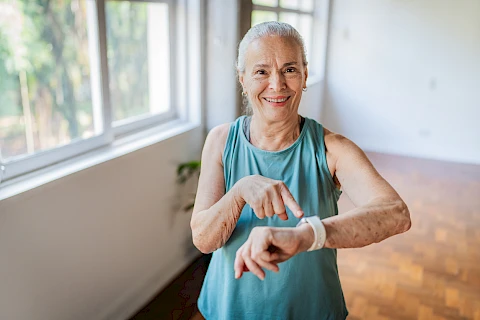
Simple trackers, priced $30 to $80, count steps, monitor heart rate, and offer a rough sleep summary. That's plenty. If the screen is easy to read and the band is easy to fasten one-handed, you've found a keeper.
Skip anything that requires setting up a smartphone account you don't already use. A tracker that works with a display on the wrist and nothing else is fine. Some newer models detect falls automatically and can alert a contact, which is a genuinely useful feature for anyone living alone in a hillside neighborhood.
Charge it once a week, on the same day, at the same spot. Sunday morning coffee, kitchen counter. That's the routine that keeps it useful.
Video Calling and Voice Assistants for Everyday Life
Staying connected matters as much as staying healthy, and video calling has quietly become the easiest way to see grandkids across the bay or across the country. Tablets with large screens are usually easier than phones. A ten-inch display, propped on a stand, works. Ask a family member to help set up two or three shortcut buttons on the home screen so calls happen with one tap, not a login sequence.
Voice assistants deserve a mention, too. Devices like the Amazon Echo or Google Nest Hub let you set timers, hear the weather, or call a family member without touching anything. For someone with arthritic hands, that's real. Setup takes about twenty minutes with help from a grandchild who's game.
Ask about accessibility features that come free with most tablets. Larger fonts, high contrast, and voice-to-text can make everyday screen use much more comfortable.
Choosing What Fits Life in San Francisco
The right technology is the piece that quietly makes your day better and then disappears into the background. If you're stopping to troubleshoot it, it's the wrong piece. Start with one item, get comfortable, then decide whether you want another.
Senior Helpers Can Guide You Through New Tech
Our professional homecare service providers work with older adults and families across San Francisco on in-home care, companion visits, and help with the everyday routines that keep life comfortable and independent. If you'd like a hand setting up a device or building a daily routine around it, contact us and we'll figure out what fits.