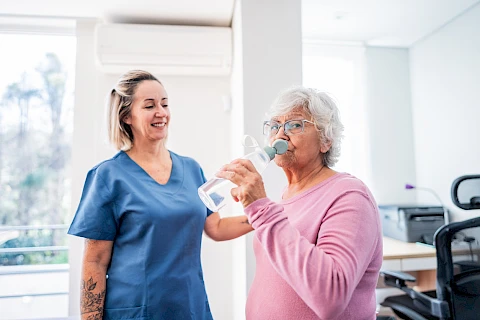
Water is essential for everyone, but staying hydrated is especially important for seniors. Aging bodies hold less water, and a decreased sensation of thirst often compounds this. As a caregiver, ensuring your senior loved one's hydration can be a pivotal part of their health care routine. We want to offer insights and strategies to help caregivers maintain seniors' hydration.
The Importance of Hydration
Due to physiological changes that occur with aging, seniors are more susceptible to dehydration. Their lower water volume, coupled with less efficient kidney function, can make processing fluids challenging. Some medications that seniors often take can also increase the risk of dehydration.
Proper hydration supports digestion, joint lubrication, and temperature regulation—imperative functions for seniors' overall health. Consistently drinking enough fluids can also help prevent urinary tract infections, assist in maintaining cognitive function, and reduce the risk of falls due to dizziness or fainting.
Recognizing Signs of Dehydration
Caregivers must recognize dehydration early. Signs of dehydration in seniors may include:
- Dry mouth and lips
- Headache or dizziness
- Dark yellow or strong-smelling urine
- Lethargy or unusual fatigue
- Confusion or irritability
Ignoring these signs could lead to severe dehydration, which may result in complications such as kidney stones, urinary tract infections, or even hospitalization.
Practical Strategies to Increase Fluid Intake
Caregivers can take several practical steps to improve a senior's fluid intake. Setting daily hydration goals can be an effective motivator. Discuss with your senior's healthcare provider to establish an appropriate target, as needs can vary. Make water accessible and visible by placing water bottles or glasses in commonly used areas. Seniors may drink more if fluids are within easy reach. Utilize hydration reminders and tracking tools. Phone alarms or apps designed to track fluid intake can help seniors drink water consistently throughout the day. These tools can be beneficial for seniors who may forget to drink regularly or have difficulty keeping track of their intake.
Creative Ways to Make Hydration Appealing
If plain water isn't enticing enough, there are several creative hydration ideas to try. For example, you can infuse water with fruits like lemon, lime, berries, or mint to add a splash of flavor. These small additions can make water more enjoyable and encourage increased consumption.
Incorporate hydrating foods into meals, such as cucumber, watermelon, and soups. These foods naturally contain high water content and can contribute significantly to overall hydration. Consider flavored water or electrolyte drinks as alternatives. However, you should check labels for added sugars or sodium, especially if your senior has dietary restrictions.
Preventing Dehydration: Tips for Caregivers
Monitoring fluid intake regularly is essential. Checking the color of urine is a practical indicator of hydration level—a pale lemon color is usually ideal. Caregivers should adjust hydration strategies based on weather and activity levels. Seniors might require more fluids during hotter days or if they are more active than usual.
Educating seniors about the importance of hydration is crucial. Highlight how it directly affects their well-being, empowering them to participate actively in maintaining their health. This knowledge can motivate seniors to be more mindful of their fluid intake and understand its impact on their overall health.
Senior Helpers Pasadena Can Help Seniors Stay Hydrated
Proper hydration is vital for maintaining the health and well-being of seniors. When they implement these strategies, caregivers can significantly impact their loved ones' quality of life. Remember, staying informed and attentive can prevent the risks associated with dehydration. For personalized caregiver support tailored to your senior's unique needs, contact Senior Helpers Pasadena. We are here to assist families in South Pasadena, Pasadena, San Marino, Altadena, and La Canada Flintridge in providing the best care possible.