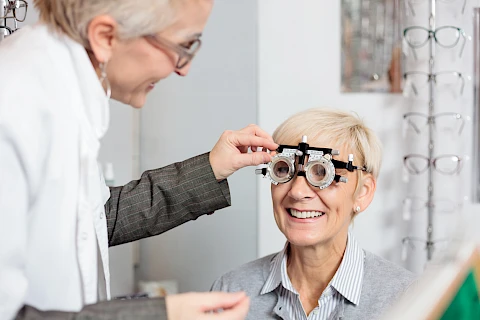
September brings National Eye Health Week, and for older adults across the Inland Empire the timing is useful. The summer glare fades a little. Reading glasses come out of the drawer for longer evenings indoors. If you haven't had an eye exam in over a year, this month is a good reminder to schedule one. Small changes in vision creep up quietly, and catching them early makes all the difference.
Common Age-Related Eye Conditions
Cataracts are the most common. A gradual clouding of the lens, they show up in most people over seventy in some form. Surgery is routine and effective, and most Inland Empire ophthalmologists offer same-week outpatient procedures. Glaucoma runs more quietly. It damages the optic nerve slowly and often without early symptoms, which is why the pressure check at an annual exam matters.
Age-related macular degeneration affects central vision. Straight lines start to bend, or a small blur appears in the middle of what you're looking at. Diabetic retinopathy is another concern, especially for anyone managing diabetes long-term. The National Eye Institute has useful guides that are worth reading before your next appointment.
Why Annual Exams Matter More After Sixty
A comprehensive dilated eye exam catches problems years before you would notice them yourself. During the visit, the doctor measures your prescription, checks pressure inside the eye, and looks at the retina and optic nerve through dilated pupils. It takes about an hour. Most Medicare and vision plans cover a yearly comprehensive exam.
If you have diabetes, high blood pressure, or a family history of glaucoma or macular degeneration, tell your eye doctor. Those change how often you should be seen. A parent or grandparent with glaucoma is enough to warrant closer follow-up for you.
Daily Habits That Support Eye Health
Sunglasses matter more than most people think. A lot more. Chino Hills sees strong afternoon sun for most of the year, and UV exposure that adds up over decades of morning walks and afternoon errands is a real contributor to cataracts and macular changes long before anyone thinks to worry about them. Choose glasses that block 100 percent of UVA and UVB. A wide-brimmed hat adds another layer.
Diet plays a real role. Leafy greens, colored vegetables, fatty fish once or twice a week, and enough water. Smoking speeds every age-related eye condition, so if quitting is on the list, this is another reason to move it up. Screen time deserves a habit too: every twenty minutes, look at something twenty feet away for twenty seconds. That rests the focusing muscles.
When to Immediately Call Your Doctor
Some symptoms need a same-day call, not next week's appointment. Sudden vision loss in one eye. A curtain or shadow moving across your visual field. New floaters or flashes of light. Eye pain with nausea. These can point to retinal detachment, acute glaucoma, or a stroke, and hours matter.
For anything less urgent, keep a small notebook by the phone. Jot down when a symptom started, how often it happens, and what makes it better or worse. Your eye doctor will get to the answer faster with that information in hand.
Keeping Vision Steady Across the Inland Empire
At Senior Helpers Inland Empire, our caregivers serve families in Chino, Corona, Chino Hills, and San Bernardino County. We help with rides to eye appointments, medication reminders for glaucoma drops that need daily consistency, and safe home setup for anyone whose vision has changed. If a family member could use that kind of support, contact us and we'll take it from there.