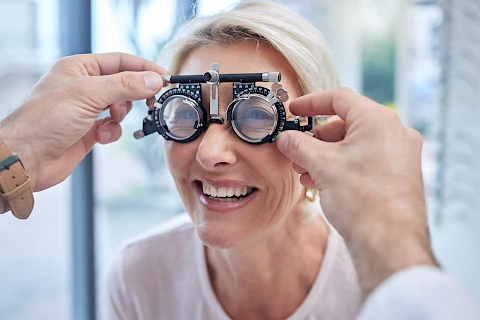
The bright September sun in the Inland Empire has a way of revealing what indoor light hides. Suddenly Mom is squinting at the freeway signs on the 15, or Dad's holding the newspaper at arm's length again. National Eye Health Week falls this month, and it's a good chance for family caregivers to walk through a simple checklist for the seniors they love. Small changes catch big problems early.
What to Watch for in Daily Life
Vision changes rarely show up as a dramatic announcement. They creep in.
Watch for the small tells. A missed step off the curb outside the house in Chino. A cup that gets set down half an inch to the left of the coaster. Squinting at the television. Bumping the corner of the coffee table more than once. Any of these can point to declining sharpness, contrast sensitivity issues, or peripheral vision loss.
Trouble driving at night matters too. Halos around headlights in Corona traffic often signal early cataracts. If your parent has quietly stopped driving after sunset, that's information worth acting on.
Ask directly, not just once. "How's your vision been lately?" tends to get an "it's fine" the first time. The third time, you'll get the real answer.
Getting Eye Exams on the Calendar
Adults 65 and up should have a comprehensive dilated eye exam every one to two years, and yearly if they have diabetes or a family history of glaucoma or macular degeneration. The National Eye Institute has a plain-language schedule worth printing.
A comprehensive exam is not the same as the vision check at the DMV or a quick glasses fitting at LensCrafters. It includes dilation, a look at the retina, and pressure testing for glaucoma. Ask specifically for that when you book.
If cost is a concern in the Chino Hills or San Bernardino County area, EyeCare America and local county senior services can point families toward low-cost or no-cost options. Your parent's primary care provider often has a referral list too.
Home Changes that Make a Real Difference
Better lighting comes first. Layer it. A single overhead bulb creates shadows and glare, but three light sources at different heights (a floor lamp, a table lamp, and task lighting on the reading chair) transform a room.
Contrast is the next lever. A dark placemat under a white plate makes the plate visible to someone with macular degeneration. A colored strip on the top and bottom stair edges prevents a fall. Bathroom grab bars in a color that stands out from the wall get used more often than ones painted to match.
Reduce clutter on the floor and on countertops. A busy visual field is harder to read when contrast sensitivity drops. Round chair legs, corner cushions on coffee tables, and cleared walkways sound obvious. They still get missed. And don't overlook large-print options for medication labels and calendars, plus a magnifier with a light for reading recipes and cards.
Supporting Seniors’ Vision Across the Inland Empire
Vision care rides alongside everything else that changes with age, from medication routines to fall prevention. Our Senior Helpers Inland Empire team supports families across Chino, Corona, Chino Hills, and greater San Bernardino County with in-home caregiving that pays attention to exactly these small details. When you'd like a hand thinking through what's next for your senior loved ones, contact us and we'll walk through options together.