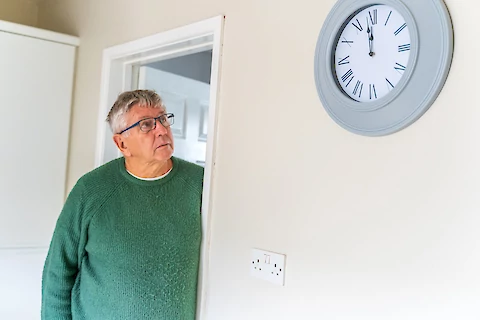
Losing track of time is one of the earliest and most common changes in dementia. A senior may ask what day it is several times an hour, get ready for church on a Tuesday, or think it's morning after an afternoon nap. The brain areas that track time and form new memories are affected early, so reminders don't stick the way they used to. The goal isn't to drill the correct date. It's to set up the home and the day so time cues are always visible and the routine does most of the work.
Why People With Dementia Lose Track of Time
Keeping track of time depends on short-term memory, attention, and the ability to read cues like daylight and meals. Dementia affects all three. Many people first notice it as trouble remembering the date, then the day of the week, and later the time of day or season. Changes in sleep, long naps, and staying indoors make it harder still, because natural cues like sunlight and activity become less clear.
Doctors often use a clock-drawing test, where a person draws a clock face and sets the hands to a certain time, as part of memory screening. Trouble with that task is one reason ordinary clocks can become confusing as dementia progresses.
1. Use a Dementia Clock
A dementia clock is a digital clock designed for people with memory loss. Instead of showing only numbers, it spells out the full day, date, and time of day, such as "Tuesday, Morning," in large letters with no abbreviations. Many models also offer custom reminders for meals, medications, and appointments, and some can display photos or messages sent by family.
When choosing one, look for a large, high-contrast screen, full words instead of abbreviations, a time-of-day label like morning, afternoon, evening, or night, automatic date updates, and a screen that dims at night so it doesn't disturb sleep. In Arizona, which doesn't observe daylight saving time, make sure the automatic time change can be turned off so the clock doesn't jump an hour in spring and fall.
Dementia clocks tend to work best in the early and middle stages, when a person can still read and use the information. Place one where the senior spends the most time, such as beside a favorite chair or the bed.
2. Keep a Large, Simple Calendar
A large wall calendar in a central spot, like the kitchen, gives seniors a place to check the date and upcoming plans. Cross off each day together in the morning, and write appointments and visits in simple words. Keep it uncluttered, with only the most important events, so it stays easy to read.
3. Let Natural Light Mark the Day
Open curtains and blinds in the morning so sunlight fills the home, and spend some time outdoors or by a window early in the day. Bright daytime light helps set the body clock, which can improve sleep at night and reduce confusion in the late afternoon. In the evening, dim the lights and close the blinds to signal that the day is winding down. During West Valley summers, morning is the best time to get outside before the heat builds.
4. Keep Daily Routines Consistent
A predictable routine helps seniors know what comes next even when they can't name the time. Keep wake-up, meals, medications, activities, and bedtime at about the same time each day. Link activities to each other so one cue leads to the next, like a walk after breakfast or a favorite TV show after dinner. A posted daily schedule with pictures can help in the earlier stages.
5. Use Gentle Cues Throughout the Day
Mention the day and time naturally in conversation instead of quizzing, such as, "It's Saturday morning, so your granddaughter is coming for lunch." Use sensory cues to mark transitions, like the smell of coffee in the morning, calm music before bed, or a favorite blanket at night.
Balancing Time Awareness With Comfort
Correcting a person with dementia again and again about the date or time often causes frustration, anxiety, and embarrassment, and it rarely helps the information stick. If a senior believes it's a different day or year, it's usually kinder to respond to the feeling behind the question. For example, if they're worried about being late for work, reassure them that everything is taken care of. Comfort and a sense of safety matter more than exact accuracy.
Dementia Care at Home in the West Valley
A steady routine is easier to keep with consistent support every day. Senior Helpers West Valley Alzheimer's and dementia care caregivers help seniors follow daily routines, keep calendars and clocks up to date, and redirect gently when confusion sets in, and respite care gives family caregivers time to rest. Contact Senior Helpers West Valley to learn more.