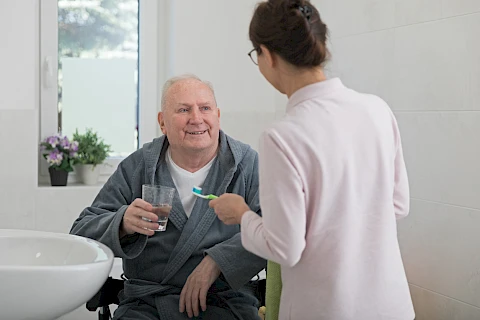
A comfortable mouth paves the way for a vibrant day, making meals enjoyable and conversations flow freely. This comfort minimizes pain, enabling older adults to fully embrace the joy of life. Senior Helpers knows that a few small adjustments to the routine keep senior oral hygiene manageable throughout the year.
Place Senior Oral Care Hygiene Supplies in One Place
Brushing twice a day is easier if the toothbrush, toothpaste, cup, and denture supplies are kept together in a small basket by the sink. A large-print note on the mirror and a timer can serve as reminders. Use a soft-bristle brush and fluoride toothpaste. An electric toothbrush may benefit someone with sore hands or a weak grip.
Find a Better Way Between Teeth
Mayo Clinic explains why regular dental care still matters as people age, so finding better ways for elderly loved ones would help.
Floss picks, water flossers, and interdental brushes are easier options than traditional floss. Ask the dentist or hygienist which one suits the person's teeth and dental work.
Also, bring a list of medications when going to the dentist's office because some can contribute to dry mouth. Make sure to ask and keep dental appointments on the calendar to help the older adult remember. A short note with the date and office number is usually enough.
Help the Mouth Stay Comfortable
Offer water regularly if dry mouth is a problem. Limit frequent sugary drinks and sticky sweets that can cling to teeth. Small changes add up.
Dentures need daily cleaning. Handle them over a folded towel or a sink partly filled with water, which can soften the landing if they slip from a hand (a yellow towel makes them easier to spot).
Some people may clean dentures after breakfast, while for others, bedtime may work better. The timing for these activities is personal, so consider what they want.
Watch for a Reason to Call
A sudden change in a senior's oral hygiene often points to an underlying physical issue or discomfort. Watching for subtle cues and making simple adjustments can help identify when it is time to contact a dentist.
- Investigate Sudden Behavior Changes: Ask gently if brushing habits drop off, as pain, dry mouth, a loose denture, or reduced dexterity can make the task difficult.
- Identify Dental Warning Signs: Contact the dental office immediately for mouth pain, bleeding gums, loose teeth, unhealed sores, chewing issues, or ill-fitting dentures.
- Adapt the Environment for Safety: Set up a sturdy chair near the sink or a well-lit area with a cup and basin if standing feels unsteady, letting the person do as much as they comfortably can.
Planning Senior Oral Hygiene Routines at Home
The right tools and timing can make dental care easier to keep up with for elderly loved ones. Review our suggestions to see which ones would fit your loved ones.
We can help with daily routines and companionship at home. Contact us to ask about Senior Helpers Menomonee Falls support in Jackson, Richfield, Slinger, Ozaukee, Grafton, and nearby communities.