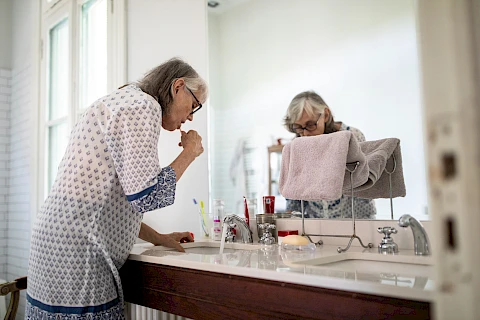
Simple daily hygiene supports health, comfort, and confidence at every age. For older adults, familiar routines may need small adjustments as mobility, skin, vision, or energy levels change. Consistency matters more than creating an elaborate routine that is difficult to maintain.
Begin With What Feels Familiar
Healthy hygiene has room for personal habits. Some people like a morning shower; others feel better washing up at night. Start with what makes your parent comfortable.
Set out their favorite soap, a soft towel, and clean clothes before you begin. In Oconomowoc, warming the bathroom on a cool morning may help. In Watertown, a shower chair may make bathing less tiring. Keeping familiar products and timing can make changes feel less disruptive.
There is no prize for rushing. Give your loved one enough time to do what they can independently.
Keep Skin Care Gentle
Bathing needs can vary from person to person, so focus on keeping skin clean without overdoing hot water or harsh products. Use warm water rather than hot water and pat skin dry instead of rubbing.
A fragrance-free moisturizer may help dry skin. Check for redness, sores, bruises, or areas that stay itchy, and report any persistent changes to a health care professional. The National Institute on Aging offers skin care guidance.
Keep products simple. Strong scents or rough washcloths can make a pleasant routine uncomfortable. Switch products if they irritate the skin.
Put Oral and Nail Care in View
Brush teeth twice daily with fluoride toothpaste and clean dentures as directed by a dentist. A soft brush with a larger handle can be easier for someone with arthritis. Keep dental visits on the calendar.
Trim fingernails when they are softer and easier to manage. Thick, painful, or hard-to-reach nails call for advice from a foot care professional or health care provider. In Fort Atkinson, a small grooming kit beside a favorite chair can serve as a reminder (after the morning paper). That may feel better.
Watch for mouth pain or new trouble chewing. Those changes deserve a call to the dental office rather than waiting for the next routine visit.
Set Up the Bathroom Safely
Clear the floor, use a non-slip shower surface, and store frequent items at waist height. A handheld showerhead or long-handled sponge can help someone reach without straining. See what changes.
The CDC recommends removing tripping hazards, improving lighting, and adding grab bars around tubs, showers, and toilets to help reduce the risk of falls at home. Review the bathroom again whenever mobility or balance changes.
Offer help with privacy in mind. Ask before stepping in, explain what you are doing, and let the person handle the parts they can manage safely. Support should make the routine easier without automatically taking it over.
Keep Everyday Hygiene Supplies Within Reach
Check supplies before they run out. Toothpaste, denture cleanser, clean washcloths, and comfortable clothes can all interrupt a routine when they are missing. A short supply list kept somewhere convenient can prevent last-minute searches without making the bathroom feel clinical.
Put used towels and clothes in an easy-to-reach basket. A simple setup can make the routine easier to complete from start to finish.
Foot care also deserves regular attention. Watch for dry or cracked skin, irritated areas, or shoes that rub and make walking uncomfortable. Contact a health care professional if you notice persistent pain, sores, swelling, or other concerning changes.
Supporting Healthy Routines at Home
Healthy hygiene habits do not need to be complicated. Familiar products, a safer setup, and enough time to complete each task can help older adults maintain comfort, confidence, and independence.
Senior Helpers Lake Country provides in-home assistance that respects personal preferences and familiar routines. Contact us to discuss support for families in Oconomowoc, Watertown, Fort Atkinson, Columbus, Beaver Dam, and Waupun.