Summer in the Inland Northwest can catch people off guard. Spokane and the surrounding region are famous for clear, beautiful summers. However, temperatures regularly climb into the upper 80s and 90s. During heat events, the dry air can feel deceptively tolerable right up until it isn't.
Seniors face a higher risk of heat than younger adults. As a caregiver, knowing what to watch for and how to respond can help protect your loved one from a dangerous situation.
Why Seniors Are More Vulnerable to Heat Illness
Understanding the risks is an essential part of heat safety for seniors. The body's cooling system becomes less efficient with age. They sweat less and may not feel thirsty even when dehydrated, which means warning signals that work reliably for younger people can arrive late or not at all.
Certain medications commonly taken by older adults, including diuretics, antihistamines, and some blood pressure medications, can further reduce the body's ability to stay cool. Diabetes and heart disease are two chronic conditions that increase the risk of heat-related illness.
The CDC's heat safety guidance describes heat exhaustion and heat stroke clearly. Heat exhaustion typically presents with heavy sweating, cold or pale skin, weakness, dizziness, nausea, or headache.
Heat stroke is a medical emergency, marked by a body temperature above 103°F, hot and red skin (often without sweating), a rapid pulse, and confusion. If you suspect heat stroke, call 911 immediately.
Cooling Strategies for Seniors at Home
Air conditioning is the most effective protection during extreme heat. If your loved one's home in Spokane or Hayden doesn't have central air, a window unit in the bedroom provides a manageable cooling zone. Keep it running on very hot days, even if they say they feel fine; the perception of heat is often blunted in older adults.
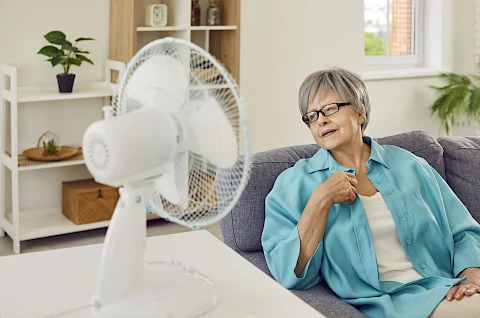
Encourage staying indoors during the hottest hours, roughly 10 a.m. to 4 p.m. Cold cloths on the neck and wrists lower body temperature quickly. Fans alone are less effective when temperatures exceed the mid-90s, since circulating hot air can accelerate heat absorption.
Hydration matters enormously. Encourage older adults to drink water throughout the day, even if they don't feel thirsty. Watermelon, cucumber, and peaches are examples of fruits with a high water content that attractively increase fluid intake.
If You Don’t Live With Your Senior Relative
For caregivers in Post Falls, Sandpoint, or Rathdrum who aren't with their loved one daily, heat safety for seniors requires more frequent check-ins during the summer months. A midday phone call on the hottest days is a simple habit with real value.
Ask specific questions: Have you had something to drink today? Is the air conditioning working? Have you eaten anything?
Identify in advance where they can go if their home becomes too warm: a library, a shopping mall, a senior center, or a friend's home. Write those options down and put the list somewhere easy to find. If an older adult uses a medical alert device, make sure it's charged and within reach.
Have that conversation now, before the hottest weeks arrive, about what they should do and who to call if they start feeling unwell. It's far easier to plan than to navigate it in the moment.
Staying Safe Through Every Degree of Summer
Heat safety for seniors is one of the most essential and preventable aspects of summer caregiving, and caregivers can make a decisive difference.
Senior Helpers of Spokane supports families across Spokane, Coeur d'Alene, Post Falls, Sandpoint, Rathdrum, Hayden, and Moscow with reliable, compassionate in-home care through every season. Contact us to talk about how our caregivers can help keep your loved one safe and comfortable this summer.