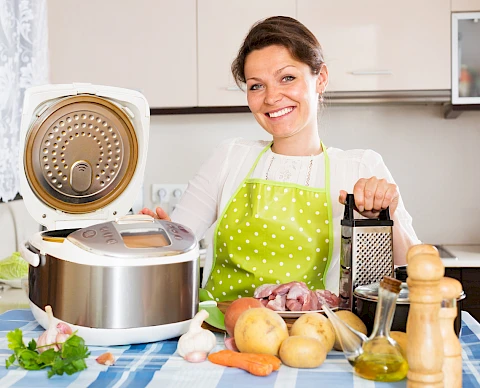
The slow cooker survives every kitchen-gadget trend for a reason. You load it before work, and by five o'clock the house smells like Sunday supper. For a family caregiver juggling a senior relative’s appointments, kids at school, and the last of the summer beach schedule, that six-quart friend on the counter is honest help. It also makes meals that older adults can chew, digest, and enjoy days later.
Why the Slow Cooker Suits Seniors
Long, slow cooking softens meat and vegetables. That matters more if your senior loved one's dentures don't fit as well as they used to, or if he's easing back on chewy proteins after a dental visit. Soft doesn't have to mean bland; a pot of pulled chicken with cumin, garlic, and a squeeze of lime is as tender as it is flavorful.
Slow cookers also make it easy to control sodium, sugar, and fat. You choose the ingredients. Boxed shortcuts stay optional.
The American Heart Association's healthy cooking pages offer good guidance on lower-sodium, heart-friendly swaps that translate well into slow-cooker recipes.
Five Recipes That Cover a Full Week
Sunday: roast a whole chicken with lemon, garlic, and rosemary on a bed of carrots and celery. Shred half. Save the bones for broth.
Monday: use the shredded chicken in a soft taco filling with black beans, corn, and mild salsa. Serve over rice for anyone who has trouble with tortillas.
Tuesday: turkey chili with kidney beans, tomatoes, and sweet peppers. Ground turkey chews easier than ground beef. Portion into single-serve containers before it cools.
Wednesday: beef stew with small-cut root vegetables. Long braise. Fork-tender at dinner.
Thursday: a lentil and vegetable soup that reheats better. Add a splash of vinegar at the end to brighten the flavor for palates that have lost some sensitivity.
Any two of these will feed a household for the week when paired with a simple side.
Building Meals for Common Dietary Needs
Low sodium: skip canned broth or use a "no salt added" version, and season with garlic, onion, lemon, and fresh herbs—salt at the table, not in the pot.
Diabetes-friendly: pair lean protein with lots of non-starchy vegetables. Go easy on potatoes and pasta, and rely on beans, lentils, and barley for satisfying carbs. Skip sugary sauces.
Soft-texture: use ground meats, flake fish, cook vegetables until fork-tender, and let stews sit for ten minutes so the flavors meld. A stick blender, used partway through a bean soup, thickens it beautifully without adding cream.
Cardiac and kidney restrictions vary a lot. Ask your loved one’s dietitian for a short list of ingredients to avoid, and tape it inside a cupboard door. Reference it when you shop.
Portioning and Food Safety
Cool leftovers fast. Transfer soups and stews into shallow containers within two hours (one hour if the kitchen is warm). Refrigerate what you'll eat in three days. Freeze the rest in single-serve portions with dates written large.
Reheat until steaming, with an internal temperature of at least 165°F throughout. A small kitchen thermometer is a handy tool worth having in the drawer.
Label every container. Rotate. Older adults do better with meals they can pull, warm, and eat without needing to call.
Prepare Nutritious Meals
Senior Helpers supports families of seniors with grocery help, safe meal prep, and companionship at the table so no one eats dinner alone. If you live in Virginia Beach and need a hand fitting nutritious meals into a full week, contact Senior Helpers Virginia Beach to learn how we can help.