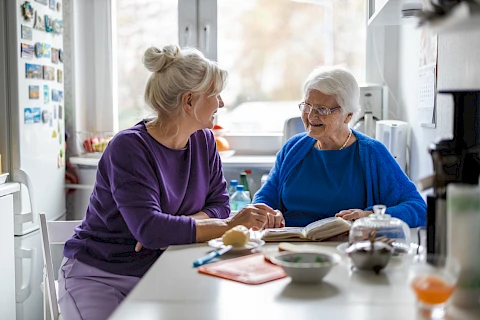
If your world has gotten quiet over the past year or two, you're far from alone. A spouse passes, driving gets harder, or friends move closer to their grandkids, and a full social calendar can shrink to almost nothing without anyone quite noticing. Rebuilding from there feels harder than it should. It doesn't have to happen all at once, and it doesn't require a personality transplant. Small, steady steps work better than grand gestures.
Naming What's Been Hard
Before jumping to solutions, it helps to be honest about what's been holding you back. Maybe it's grief. Maybe your hearing makes group settings exhausting, or your knees make it harder to get to the places you used to go. Maybe you simply feel out of practice. None of these are reasons to give up on connection. They're just details worth naming so you can plan around them.
Start With the Smallest Possible Step
If a group activity feels overwhelming right now, don't start there.
- Call one person you haven't spoken with in a while, even for five minutes.
- Say hello to a neighbor in Bristol or Abingdon when you're out getting the mail.
- Text a family member a photo or a question, just to open the door.
- Sit on your porch at a time when neighbors tend to be out walking.
These low-stakes actions rebuild your social muscles without requiring you to walk into a room full of strangers.
Working Up to Groups and Activities
Once phone calls and small chats feel easier, consider something with a bit more structure. Senior centers in Marion and Tazewell often run low-pressure activities like card games, chair exercise classes, or coffee hours built specifically so newcomers don't feel out of place. Faith communities in Chilhowie and Damascus can offer something similar, especially through small groups or meal ministries where the same faces show up week after week.
If transportation or energy is the real barrier, say so out loud to a family member or caregiver. Getting to the door is often the hardest part. Once you're there, most people find the rest comes more easily than expected. The National Institute on Aging recommends starting with activities that already interest you rather than forcing yourself into something unfamiliar, since motivation tends to hold up longer when the activity itself feels worthwhile.
What to Do If the First Try Doesn't Click
Not every group will be the right fit, and that's fine. If a class in Glade Spring doesn't feel welcoming, try a different one in Saltville or Meadowview instead. Rebuilding a social life is more like planting several seeds than betting everything on one option. Give yourself credit for trying at all. Showing up to something new after a long quiet stretch takes real effort, even when the group itself turns out to be a poor match.
Support for Every Comfort Level
Reconnection looks different for everyone. For some it's a weekly phone call. For others it's a return to church, a bridge club, or a walking group. Whatever pace fits you, know that support is available across Abingdon, Bristol, Chilhowie, Damascus, and surrounding areas.
Our caregivers can help with transportation to social activities, encouragement to take that first step, and genuine company along the way. Contact us to talk about how we can support you as you rebuild those connections this summer.