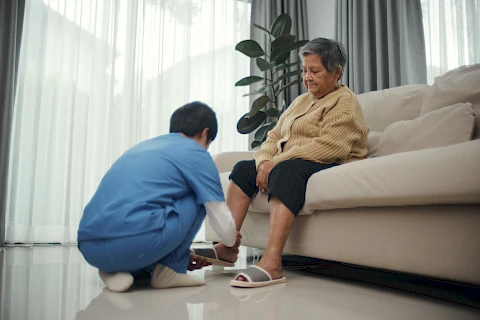
One of the most underrated pieces of a safer home has nothing to do with the house. It is what your parent has on their feet when they walk across it. Slippers with slick soles. A worn-out pair of loafers with the counter mashed down. Socks on tile. Any of these can turn a Tuesday morning in Sugar Land into a hospital day at Memorial Hermann. The right shoe is a small change with a big payoff.
Why Older Feet Need Different Shoes
Feet change over time. Arches drop. Ligaments loosen. Nerves in the toes and soles dim, which means the brain gets less information about where the ground is. A shoe that felt fine at 55 may not give your parent enough feedback at 78, and shoes bought a decade ago have long since lost their grip.
The National Institute on Aging's fall-prevention guidance is specific: shoes should have firm, non-skid soles, low broad heels, and enough structure to hold the foot in place. Backless slides and pool shoes are not house shoes, even in Texas heat.
What to Look For
Sole. Rubber, not leather. Some tread, but not so aggressive that it catches on carpet edges. If the sole is worn slick from years of wear, the shoe is done.
Heel. Wide, low, and firm. A one-inch heel is fine. A stiletto obviously is not; neither is a rocker-bottom "walking shoe" if balance is already shaky.
Closure. Laces, hook-and-loop straps, or a firm stretch panel that holds the shoe on the foot. If your parent's shoe slips at the heel with every step, that shoe is a fall waiting to happen.
Fit. Get a real fitting in the late afternoon when feet are slightly swollen. Try both feet, walk around the store, and buy for the larger foot. Many older adults are wearing shoes half a size too small because they still remember what they wore at 50.
Indoor option. A closed-back, rubber-soled house shoe. Not a floppy scuff. Vionic, Orthofeet, and a few Skechers styles fit this niche well.
Evaluating the Current Shoe Situation
Walk into the closet with your parent. Ask them to pick out the pairs they actually wear. Then look at each one honestly. Is the sole worn smooth? Is the heel collapsed? Are they held together with duct tape? Do they fit the current foot, not the foot from a decade ago?
Anything that fails should be retired. Not stored "just in case." The just-in-case shoe is the shoe that ends up on your parent's foot the morning they slip.
The Conversation Is the Hardest Part
Most older adults do not love being told what to wear. Frame it kindly. "I noticed the sole is worn down on your favorite pair. Would you want to look for another set together this weekend?" Offer to make it an outing to Baybrook or First Colony Mall with lunch after. Bring in one new pair at a time. Let the old ones disappear quietly.
If arthritis or swelling makes the current shoes uncomfortable, a podiatrist can prescribe custom inserts or wider sizes that Medicare often covers under the diabetic-shoe benefit if your parent qualifies.
Safer Steps Across Fort Bend County
At Senior Helpers Sugar Land, our caregivers help families across Sugar Land, Missouri City, Richmond, and Stafford with the daily details of staying steady on their feet, from a shoe closet review to companionship on a shopping trip to a walking partner for the evening around the block. If you would like a hand looking at what your parent has on their feet this fall, contact us and we will schedule a visit.