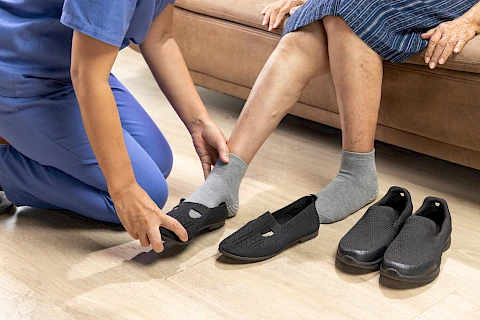
Look down. What are you wearing on your feet right now? If the answer is a slipper with a smooth sole, or the pair of loafers you bought in 2011, this September is a good time to reconsider. It's Fall Prevention Awareness Month, and shoes are one of the cheapest, fastest changes you can make to lower your risk of a bad tumble in the kitchen or on the driveway.
Why Your Shoes Matter More as You Age
Balance depends on more than muscles. It depends on how well your feet can feel the floor. As we age, the pads of the feet thin out and small sensory nerves get quieter. Good shoes have to do some of that work for you: give you grip, hold your heel steady, and give you a stable base.
The CDC's footwear guide for older adults gives examples of appropriate footwear to reduce fall risk. That's plain language for "changing your shoes changes your odds." Not every fall is preventable. But plenty of them are.
Barefoot at home is fine on carpet if your balance is solid. On tile or hardwood, you need traction.
Features to Look For
The right shoe has five things: a firm sole with real tread, a low and wide heel, a back that holds your foot in place, a fastener you can operate one-handed, and enough room for your toes to spread out.
Look for a sole that flexes at the ball of the foot but stays firm through the arch. Squeeze the heel from side to side; if it collapses, so will your ankle on an uneven sidewalk. A rubber outsole with a visible tread pattern grips a wet floor better than a smooth leather one.
Velcro straps are wonderful for arthritic hands. So are elastic no-tie laces. Neither is a step down from tied shoes; they're just easier to secure snugly every time.
Styles to Avoid
Some old favorites belong in the giveaway pile. Backless slippers. Flip-flops. Loose scuffs. Any shoe you have to shuffle to keep on. High heels above one inch. Rocker-bottom shoes unless a physical therapist prescribed them for a specific reason.
Bedroom slippers should have a back and a rubber sole. Yes, they exist. Yes, they're comfortable.
House socks with grippy dots are fine for a nap on the couch. Not for walking to the bathroom at 2 a.m. Put on real shoes.
Importance of Proper Fit
Feet change shape with age. Most people over 65 wear the wrong size, usually a half size too small, because their feet lengthened and widened decades ago. Get both feet measured every year; the bigger one sets the size.
Shop in the late afternoon when feet are at their fullest, wear the socks you normally wear, and walk around the store on any hard surface. Leave about a thumb's width between your longest toe and the end of the shoe. Try both shoes. Feet are not identical.
If diabetes, neuropathy, or foot deformities are part of your picture, ask your primary care doctor for a referral to a podiatrist. Many insurance plans cover custom insoles, and they can change everything.
Do You Need Support?
Our team at Senior Helpers Legacy Trail works with families across Frisco, Little Elm, Aubrey, Plano, and Allen on the small daily details that keep older adults steady on their feet, from shoe advice to home safety walk-throughs. To discuss options, contact us today.