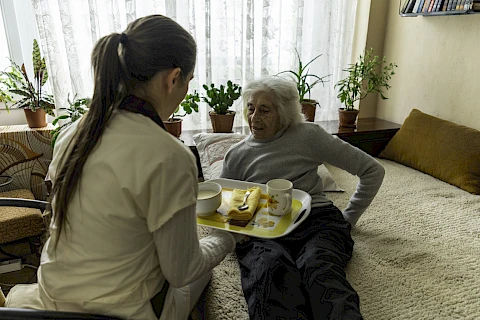
At 81, a retired schoolteacher in North Richland Hills can still balance her checkbook in pen and tell you every principal she worked under. What she can't do anymore is lift the laundry basket or drive at night. She has plenty of company in Tarrant County. They're capable and opinionated, and they'd like a little help that doesn't cost them their home or their say in things.
National Home Care Month is a good reminder that needing help with a few daily tasks does not mean giving up independence. Senior Helpers can step in when routines get harder, while leaving older adults in control of how they spend their days.
The First Things to Get Hard
The early changes tend to be small. Grocery trips get skipped because the parking lot at the store feels too far. Showers become less frequent because the tub is hard to step into. Meals shrink to toast and coffee.
None of that means a person needs to move. It means a few specific tasks have become hard. Helping with those tasks can make it easier to stay home and keep familiar routines.
The Kinds of Help That Fit
In-home care can provide non-medical support with everyday activities at home. Caregivers help with bathing, dressing, and grooming. They cook, do light housekeeping, change the sheets, and run errands.
Transportation is a big one in a region built around cars. A caregiver can take you to a doctor's appointment in Fort Worth, a church supper in Bedford, or a grandchild's band concert in Arlington, then get you home safely after dark.
Some people want a caregiver for three hours twice a week. Others want daily visits. You set the schedule, and you can change it as your needs change.
Staying Safe on Your Own Terms
Living alone carries risks, and families often worry most about falls. Having a caregiver around during baths, on stairs, or while you're carrying things can lower some of that risk. They may also spot hazards, like a slippery bath mat or a dark hallway, and help you fix them.
For families sorting out home safety and local services, a sensible first stop is the set of aging-in-place pages from the National Institute on Aging. Emergency planning gets its own treatment at Ready.gov, with tips written for older adults.
Room for the Good Parts
Independence also includes the pleasant parts of life. A caregiver who handles the vacuuming leaves you free to visit the library in Hurst, play dominoes with friends, or sit outside on a mild December afternoon.
Companionship counts. Spending regular time with someone who knows your stories and your routine can brighten days that might otherwise pass alone. National Home Care Month also puts attention on this part of care: help at home can create more room for the activities, relationships, and routines an older adult still wants to keep.
Medication reminders, a hot lunch on the table, and a ride when you need it all leave you with energy for the things you actually care about.
In-Home Care for Keller and Its Neighbors
Maybe it's only the laundry basket and the night driving for now. National Home Care Month is a useful time to think about which tasks have become harder and which ones you would rather hand off.
Senior Helpers Keller can start there, with in-home care for older adults in Arlington, Bedford, Fort Worth, Hurst, and North Richland Hills, and add companionship, personal care, meals, housekeeping, errands, or reminders later if you want them, all on a schedule you choose. Contact us and tell us which tasks have gotten hard.