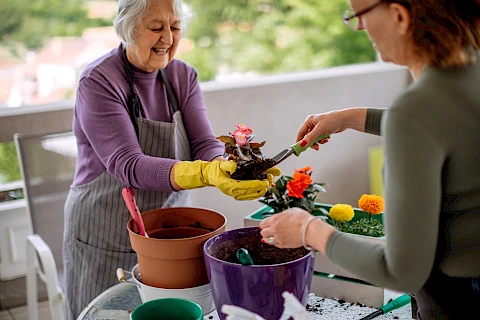
Gardening is one of those activities that many seniors are reluctant to give up, and for good reason. Time spent in the garden offers fresh air, a sense of purpose, and the quiet satisfaction of watching something grow. For seniors living with arthritis, the challenge isn't whether to keep gardening; it's figuring out how to do it in a way that protects the joints rather than punishing them.
Choosing Tools That Work With Your Hands
Standard gardening tools are designed for grips and wrist positions that put real strain on arthritic joints. The good news is that adaptive tools have become much easier to find and genuinely make a difference. Look for tools with ergonomic, cushioned handles that allow a looser grip. Pistol-grip trowels reduce wrist rotation, and long-handled tools eliminate the need to kneel or crouch as often.
Lightweight tools made from aluminum or fiberglass reduce the overall weight your hands and wrists have to manage. Avoid hand tools with thin metal handles, which concentrate pressure on a small area of the palm. Gardening gloves with extra padding around the palm also help absorb vibration and provide light compression that many people find comfortable during activity.
Timing and Pacing Make a Real Difference
Joints tend to be stiffer in the morning, especially in the cooler spring weather common in Rock Hill and Chester. Waiting until mid-morning, when temperatures have risen slightly and the body has had time to warm up, usually means a more comfortable, productive time in the garden. A brief, gentle stretch of the hands, wrists, and shoulders before picking up any tools is worth making a habit of.
Work in shorter sessions with breaks built in rather than pushing through discomfort. Twenty minutes of focused activity followed by ten minutes of rest is far more sustainable than an hour of continuous effort that leaves the joints aching for days. The Arthritis Foundation recommends listening closely to the difference between the mild muscle fatigue of normal exertion and the sharper pain that signals the need to stop.
Switching tasks frequently also reduces repetitive strain. Alternate between digging, watering, weeding, and deadheading rather than focusing on one activity for a long stretch.
Container and Raised-bed Gardening
Raised garden beds, at a height of 24 to 30 inches, eliminate the need to bend low or kneel on the ground entirely. They're worth the initial investment for seniors in Clover or York who want to continue gardening as joint limitations increase. Lightweight containers on a patio or deck serve the same purpose and can be arranged at whatever height feels most comfortable, even table height.
Container gardening also allows for a focused collection: herbs like basil, rosemary, and chives; cherry tomatoes; or flowers that need minimal pruning. Smaller-scale planting means less overall effort while still delivering the sensory rewards and daily routine that make gardening meaningful.
Soil for raised beds and containers should drain well and be loose enough to work without heavy digging. Pre-mixed potting soil designed for containers is easier to handle than dense garden soil.
Keeping the Garden a Place of Joy
The goal is to keep gardening in your loved one's life, adapted rather than abandoned. Senior Helpers of Rock Hill works with families throughout Rock Hill, Chester, York, and Clover to provide in-home care that supports the activities seniors value most. Whether that means a caregiver who can assist with carrying supplies or help with tasks that are no longer comfortable, we're glad to help. Contact us to talk through what that support could look like.