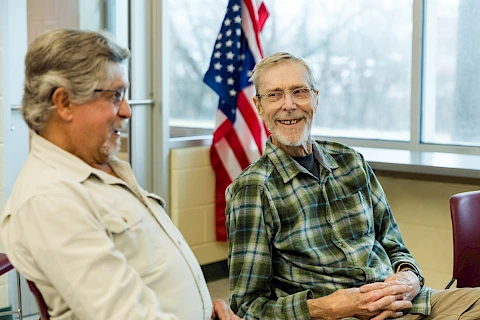
Shared deployments, the particular rhythms of military life, the moments that stay with you for decades, these are things fellow veterans understand immediately. For many senior veterans in Bend, Redmond, and Prineville, that kind of connection becomes harder to maintain after retirement, after a health change, or after a move. A caregiver can give tremendous support in keeping those bonds alive.
Why Peer Connection Matters
Research consistently links social isolation to worsening health outcomes in older adults. For veterans, isolation carries additional weight because military service creates a cultural identity that doesn't simply fade when the uniform comes off. When that sense of belonging erodes, the effects show up in mood, cognition, and motivation. The U.S. Department of Veterans Affairs recognizes peer support as a meaningful component of veteran mental wellness, and community-based programs nationwide reflect that understanding.
Many senior veterans are reluctant to seek help but more willing to show up for something that feels like a gathering among equals. A monthly lunch with other veterans at a VFW post in Sisters or a veterans' coffee group in Madras often gets a better response than a scheduled medical appointment.
Finding Veteran Groups and Gatherings
Central Oregon has a range of options.
VFW posts and American Legion chapters meet regularly in Bend and Redmond. Local posts often host dinners, volunteer projects, and informal drop-ins that don't require much commitment upfront.
The Oregon Department of Veterans' Affairs maintains a directory of county-level resources and can connect veterans in Powell Butte, Prineville, and surrounding areas with peer programs.
Veteran Service Organizations (VSOs) like the DAV (Disabled American Veterans) offer both advocacy and community, and many have chapters within driving distance.
VA Community Resource and Referral Centers can also point you toward peer support specialists who work specifically with older veterans.
When you find a group that looks like a fit, offer to accompany them the first time. That ride and a familiar face at the door can make the difference between a veteran trying something once and becoming a regular.
Using Technology to Stay Connected Between Gatherings
Not every veteran can get out often, especially during bad weather or when mobility is limited. Video calls, online forums, and social platforms can bridge the gaps between in-person visits.
Start with whatever feels least intimidating. A simple video call on a tablet with a larger screen works well for a veteran who wants to catch up with an old Army buddy in another state. Facebook groups specifically for veterans of particular branches or eras have active communities where members share memories, news, and mutual support. Some veterans find YouTube channels covering military history or gear a comfortable way to feel connected to that world, even quietly, on their own.
Keeping the Connection Going
You don’t have to go it alone in supporting your senior loved one. An in-home care companion can become a natural part of fostering these connections, helping a veteran prepare for an outing, practice a video call, or simply listen. Senior Helpers of Central Oregon serves veterans and their families in Bend, Redmond, Sisters, Madras, and Prineville. Contact us to learn how our team can support the veterans in your life.