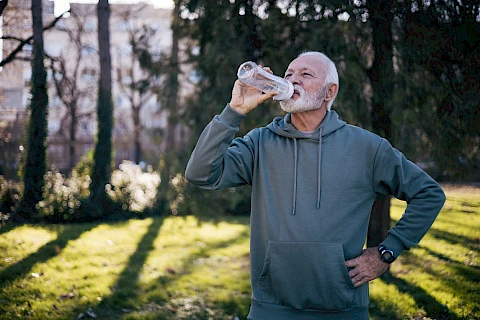
Dehydration is one of the quieter risks in older adults. Thirst signals fade with age, and a warm afternoon, a mild illness, or a new medication can push a senior into trouble before anyone at home notices. A steady drinking routine, built into the day the senior already lives, keeps things safer.
Dehydration Can Sneak Up
Older adults may feel less thirsty as they age, which can make it easier to become dehydrated. Some medicines, hot weather, fever, vomiting, or diarrhoea can increase fluid loss, while avoiding drinks because of frequent bathroom trips can also lead to not drinking enough. Watch the pattern.
A dry mouth, dark-colored urine, tiredness, or dizziness can be signs of dehydration. Confusion, fainting, or very little urination can be signs of more serious dehydration and should receive prompt medical attention. The National Institute on Aging’s guidance on healthy meal planning for older adults includes advice on getting enough fluids as part of healthy eating and everyday planning.
Choose cups that get used. A favourite mug, handled tumbler, or bottle with a straw may make drinking easier for someone with sore hands or limited grip. Familiar tools can make it easier to drink regularly throughout the day.
Put Drinks Into the Day
Set a drink with each meal. A handled cup, straw, or lightweight bottle can be easier to manage, and water, milk, broth, or caffeine-free tea may appeal more when there is a choice. Offer small amounts.
Soup, fruit, yogurt, and ice pops can add fluid on days when a full glass feels like too much. In Grove City and London, keep a bottle in the car for errands and fill it before leaving home during summer heat. Cold fruit works too (watermelon disappears quickly).
Keep a drink visible. A bottle on the kitchen table, beside the recliner, or near the bed gives the eye a prompt during ordinary moments. Move it with the person.
Plan Ahead for Heat and Outings
Fill the bottle before the door opens. Take regular sips instead of waiting for thirst, choose shade where you can, and move outdoor tasks to cooler hours. A fan, air conditioning, and light clothing can ease the strain.
For a gathering in Plain City, Circleville, or Harrisburg, bring a drink if you are unsure what will be offered. Ask a clinician about fluid goals if heart, kidney, or other conditions affect how much someone should drink. Follow that advice closely.
Plan around bathroom concerns. Smaller drinks offered more often may feel easier than one large glass, while a clinician can answer questions about changing patterns. Ask directly.
Know When to Call for Help
Call a health professional if symptoms persist. Sudden changes in alertness or trouble drinking deserve prompt advice, while severe confusion, fainting, chest pain, or inability to keep fluids down can need urgent care. Trust a change you see.
Keep a short note if symptoms return. Record:
- Weather or heat conditions
- What and how much was drinking
- When symptoms started or changed
- Any recent illness
- Bathroom habits or changes in usual patterns
- Other changes in comfort, alertness, or activity
- Share those details with the clinician because a clear record can make it easier to spot what is happening. A daily glance at the bottle helps.
Check on hot days. A quick call to someone in Williamsport, Mount Sterling, Galloway, Commercial Point, or Orient can include a simple question about drinks and comfort. Keep it friendly.
Keeping Drinks Close By
We can support the routine. Learn more about our in-home senior care services and everyday assistance designed to make it easier to keep regular drinks and meals in view. Senior Helpers Southwest Columbus serves Columbus, Grove City, London, Plain City, Circleville, Harrisburg, Williamsport, Mount Sterling, Galloway, Commercial Point, and Orient. Our team can work around the plan set by the person and their clinician.