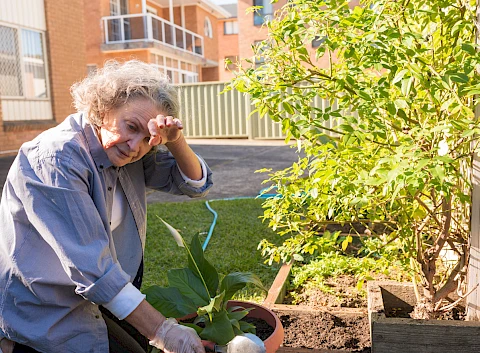
Gardening in Northern Queens takes many forms, from balcony tomatoes in Astoria to community plots in Flushing or herb boxes in Jackson Heights. For older adults, it offers movement, purpose, creativity, and connection. Planting, watering, and harvesting engage both body and mind while building routine and encouraging time outdoors. Seasonal colors and scents can prompt memories and calm the mind. For caregivers, it creates a shared activity that adapts easily to different abilities and living spaces.
What Gardening Does for the Body
Gardening offers steady, purposeful movement rather than structured exercise. Reaching, bending, lifting a watering can, and planting seeds engage muscles and joints in ways that support strength and flexibility. For seniors who prefer informal activity, it provides a reason to stay active. The CDC notes that even short periods of light activity can help maintain mobility and reduce fall risk in older adults. Tasks like weeding or planting can be done in brief sessions and adapted with tools such as raised beds or garden stools to reduce strain and improve comfort. Before beginning any new physical activity, seniors should consult their physician to determine what is appropriate for their health, mobility, and individual needs.
How Gardening Supports Emotional Health and Memory
Gardening encourages a calm, focused rhythm where tasks unfold without pressure, making it especially helpful for seniors experiencing anxiety or restlessness. Time spent with plants and soil has been associated with lower cortisol levels, supporting a more grounded state of mind.
For those living with early memory loss, gardening offers sensory grounding through textures, scents, and hands-on activity that can prompt recognition even when language is harder to access. These benefits are reflected in horticultural therapy programs used in memory care settings. Gardening also reinforces a sense of purpose, offering a feedback loop as plants respond to care and attention over time.
Making Gardening Accessible for Your Loved One
Gardening works best when it adapts to a senior’s abilities rather than requiring major adjustments from them. Simple changes can make the activity more comfortable and sustainable over time. Container gardens on balconies, patios, or windowsills offer many of the same benefits as larger gardens while reducing bending and kneeling. Raised beds, vertical planters, and tabletop setups also bring plants within easier reach. Lightweight tools, ergonomic handles, and supportive garden stools can further reduce strain for those with arthritis or reduced strength.
Plant choices matter as well. Fast-growing herbs and vegetables like basil, mint, and cherry tomatoes provide quick results, while flowering and fragrant plants add color, scent, and memory cues. Caregivers can tailor tasks to comfort and interest, whether planting, watering, or harvesting. Small daily routines—checking growth, watering, or gathering herbs—add structure and create shared moments of engagement.
How In-Home Support Encourages Active Living
Gardening offers older adults steady movement, sensory engagement, and a sense of purpose. Planting, tending, and harvesting encourage gentle activity, while color, scent, and texture keep the mind engaged. Simple routines like watering plants and checking for growth add structure to the day, especially for seniors experiencing memory changes or restlessness.
When gardening fits naturally into the home, it becomes easier to enjoy consistently. Small adjustments such as keeping plants within reach, choosing low-maintenance varieties, and matching tasks to comfort level help make participation more manageable.
Senior Helpers of Northern Queens provides in-home care that supports safe, meaningful engagement in daily activities like gardening. Caregivers can assist with setup, light watering, and routine tasks. Families in Flushing, Sunnyside, Jackson Heights, Maspeth, and College Point can reach out to explore care options that encourage active daily living.