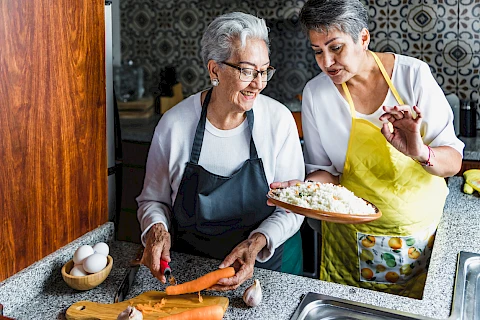
Protecting the health of older adults begins with safe food handling and preparation, which can reduce the risk of illness. Seniors are more vulnerable to foodborne infections due to changes in immunity, digestion, and chronic health conditions. Caregivers can support well-being through proper storage, safe cooking temperatures, hygienic preparation, and early recognition of illness symptoms.
The Risks
Seniors are more susceptible to foodborne illnesses because aging weakens the immune system, and chronic health conditions can further reduce their ability to fight infections. Symptoms such as nausea, vomiting, diarrhea, and dehydration can escalate quickly into serious complications. Caregivers should be aware of these risks and take steps to reduce them.
Proper Food Storage
Proper food storage helps prevent spoilage and reduce the risk of foodborne illness. Store raw meats securely on the bottom shelf of the refrigerator, monitor expiration dates, and remove any expired items. Leftovers should be kept in small, shallow containers with dates labeled to ensure quick cooling and easy tracking.
Safe Cooking Temperatures
Cooking food thoroughly is one of the most effective ways to reduce the risk of foodborne illness. Different foods require different internal temperatures: poultry should reach 165°F, ground meats 160°F, and seafood 145°F. Whole cuts of beef, pork, veal, and lamb are safe at 145°F with a three-minute rest time. A digital food thermometer is the best way to verify these temperatures rather than relying on appearance or texture alone. When reheating leftovers, ensure they reach 165°F throughout, stirring or rotating as needed to prevent cold spots where bacteria can survive.
Recognizing Signs of Foodborne Illness
Recognizing the early signs of foodborne illness in seniors can prevent further complications. Look for common symptoms like stomach cramps, fever, vomiting, and diarrhea. Act quickly if foodborne illness is suspected. Encourage fluid intake to prevent dehydration and seek medical attention if symptoms do not improve or worsen rapidly. Timely medical intervention can be lifesaving for seniors.
Guidelines for Safe Food Handling and Preparation
Safe food handling begins with good hygiene. Caregivers should always wash their hands with soap and water before and after handling food. Kitchen surfaces and utensils should be cleaned thoroughly to prevent bacterial spread. Use separate cutting boards for raw meats and other foods to avoid cross-contamination. When preparing raw foods, such as fruits and vegetables, rinse them under running water before consumption. Avoid using the same utensils for raw and cooked foods unless properly washed. These simple practices can significantly reduce the risk of foodborne illness.
Senior Helpers Northern Queens Can Help Seniors With Meal Planning and Prep
Food safety is a critical component of senior care. Caregivers can safeguard their loved ones ' health by understanding the risks, storing food properly, cooking at safe temperatures, recognizing signs of food-borne illness, and handling food safely.
Through our Personal Care service, Senior Helpers Northern Queens care teams can assist with meal planning, grocery shopping, and cooking practices that reduce the risk of foodborne illness. We support families in Astoria, Long Island City, and surrounding areas. Our professional caregiving services are tailored to the unique needs of seniors, ensuring their safety and your peace of mind. Reach out today to learn how we can assist in maintaining a healthy and safe environment for your loved ones.