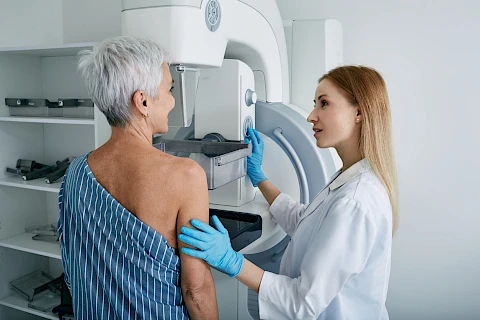
At some birthday after 70, plenty of women decide their mammogram days are over, often without ever asking a doctor. In Henderson and across the valley, many women arrived in retirement and lost touch with the doctor back home who used to mail a reminder card every spring. Mammograms after 65 are still part of routine screening for many women, while decisions later in life depend more on age, health, and personal history. Senior Helpers looks at what current guidelines say and what to ask at your next visit.
What the National Guidelines Say
The federal panel known as the U.S. Preventive Services Task Force recommends mammograms every two years for women 40 to 74. A woman in her late sixties still falls well inside that range. For women 75 and older, the task force says there isn't enough evidence to weigh the benefits and harms of screening, so guidance varies, and the decision belongs to each woman and her doctor.
Other groups frame it differently. The American Cancer Society's early detection recommendations tie continued screening to a woman's overall health. Either way, the answer gets worked out in the exam room.
For mammograms after 65, the key is not to stop automatically because of a birthday. Ask your doctor how your age, health, breast history, family history, and previous screening results affect the recommendation for you.
Why Screening Still Counts With Age
Breast cancer risk climbs as women get older. The task force notes that rates stay high even among women in their late seventies and early eighties, so a birthday by itself doesn't settle much.
Finding cancer early can mean smaller surgeries and more choices, and a woman who still hikes the River Mountains Loop Trail and has years of travel or time with grandchildren ahead has a lot riding on that. For a woman managing several serious health conditions, the math may look different, and a good doctor will talk through both sides honestly.
Mammograms After 65: Questions to Ask Your Doctor
A short list can make the appointment more useful:
- How often should I be screened now?
- Does my family or personal history change that schedule?
- Do my previous mammogram results affect what you recommend?
- How do my other health conditions factor into the decision?
- What are the benefits and downsides of continuing screening at my age?
- What happens if the mammogram shows something that needs another look?
Bring the answers home in writing. A daughter, son, friend, or caregiver can also come along to listen and take notes if you want another set of ears.
Coverage and Getting There
Cost shouldn't keep a woman from getting screened. Medicare's mammogram coverage page explains that Part B covers screening mammograms, and there's typically no cost when the provider accepts assignment. Call the imaging center to confirm. Medicare Advantage members should also check their plan's network rules, since some plans handle referrals and in-network centers differently.
Rides are often the bigger hurdle. Summer heat in Paradise and Enterprise makes midday errands tough, and some women no longer want to drive on busy stretches like the 215. An early morning appointment avoids the worst of the heat and traffic. Having someone else behind the wheel helps too, especially after a test that leaves a woman feeling a little rattled.
Rides and Reminders From Your Local Team
Senior Helpers Henderson helps older women keep their health appointments on track with rides to imaging centers and doctor's offices, reminders about upcoming visits, and a friendly companion for the wait. We serve families in Henderson, Paradise, Whitney, Boulder City, and Enterprise. Contact us to arrange support for your next screening.