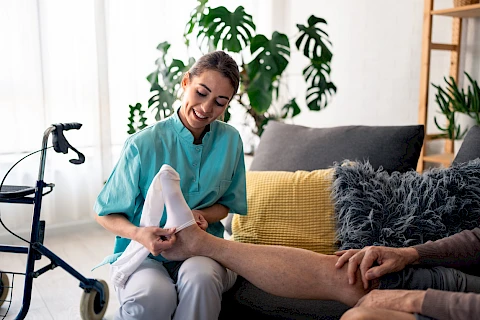
Feet do quiet work every day, and they need more attention with age. Poor circulation, diabetes, and thinner skin can turn a small blister or a sore nail into a bigger problem for a senior in a hurry, so a short weekly foot check catches most of the trouble early.
Look At Feet Every Day
Feet can change before you notice. Take a quick look after bathing or before socks go on. Check for redness, swelling, cracks, blisters, or a sore spot that does not improve.
Use a mirror if bending is hard, or ask for help from a family member. You may spot a problem while changing shoes after a walk. It may show up during a morning sock routine, so catching it early is useful.
Socks should be clean, dry, and free of tight elastic that leaves deep marks. Check the fit, and if a sock bunches inside a shoe, it can rub skin for hours without a person noticing. A daily check is also a chance to notice how footwear is affecting balance. Watch the person walk from the kitchen to the door in their usual shoes. A heel that slips or a sole that catches on the floor can turn an ordinary step into a fall risk. Take it slowly.
Wash and Dry With Care
Use warm water and mild soap, then dry well between the toes. Moisture left there can irritate skin. Trim nails straight across if it can be done safely, and file rough edges. If nails are thick, painful, or hard to reach, a podiatrist can help. Do not cut at painful corners on your own. Do not share nail tools among family members, and clean them after use. If vision or hand strength makes trimming unsafe, schedule professional foot care instead.
Foot care fits into the rest of daily life. Encourage a person to mention sore feet before a walk gets skipped or a favourite shoe stays in the closet. A small complaint can point to something that needs a better shoe, a rest day, or a professional opinion.
Choose Shoes That Fit Today
Feet may change size over time. Shoes should have room in the toe area, a secure heel, and soles that are not worn smooth. Slippers need grip too. Try on shoes later in the day when feet may be a little fuller, then walk a few steps on a clean floor before removing the tags. Thick seams or tight straps can cause trouble over hours, even if the shoe felt fine in the store.
Keep walkways clear and shoes near the bed for nighttime trips to the bathroom. Bare feet and dim halls are a poor mix. A small night-light can help. Bring foot concerns to a podiatrist with a short list of questions. Ask about nail care, inserts, and safe shoes. Getting direct advice can save a lot of trial and error.
Know When to Ask a Professional
The National Institute on Aging has general information about foot problems that can come with age. Read it before an appointment. Then ask the clinician about the person's own symptoms and shoes. Although a shoe may look fine from across the room, pay attention to how it feels after an hour of standing or walking, because rubbing, pressure, or slipping can show up slowly and affect how willing a person is to move around.
Call a health professional for persistent pain, a wound, numbness, or changes in colour. People with diabetes should follow the foot-care advice from their own care team. Do not wait on a sore that is getting worse.
Senior Helpers can assist with everyday routines in Plainfield, Bridgewater, Edison, Basking Ridge, and Somerset. We can talk about in-home senior care that helps a person stay comfortable with daily habits. Contact us to learn more.