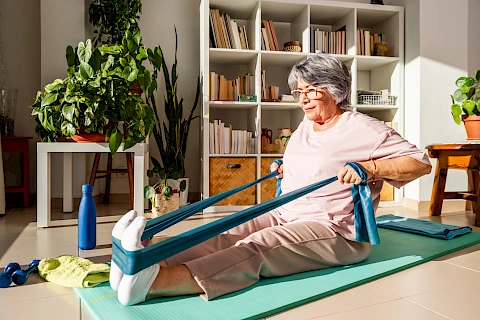
Did you know that your skeleton is rebuilding itself all the time? The body breaks down old bone and lays down new bone throughout life. However, after middle age, the breakdown side tends to pull ahead. Osteoporosis, the condition behind many fractures in later life, often gives no warning until a wrist or hip breaks. With World Osteoporosis Day coming up on October 20, Senior Helpers shares seven everyday habits to provide bone-friendly support.
1. Choose Weight-Bearing Activity
Walking, dancing, climbing stairs, and gardening all put your legs and hips to work, which helps keep your bones strong. A daily walk around the neighborhood counts, and so does a loop through a shopping center on a rainy morning, when puddles make the sidewalks less appealing. The benches inside give you a place to rest halfway through.
2. Add Some Strength Training
Resistance bands, light hand weights, and even standing up from a kitchen chair several times in a row all load the muscles that tug on bone. Begin with the lightest band.
3. Practice Balance
Slip-and-falls undo any bone-friendly support provided to a senior. Tai chi, heel-to-toe walking along a countertop, or standing on one foot while you brush your teeth may improve steadiness over time. None of them needs special equipment beyond a sturdy counter and a pair of flat shoes.
4. Get Enough Calcium, Mostly From Food
Milk, yogurt, cheese, canned salmon, collard greens, and fortified cereals are all good sources of calcium. Collards are easy to find at farmers' markets in the fall. The NIH Office of Dietary Supplements has a consumer fact sheet that lists calcium-rich foods and explains how needs change with age. Ask your doctor before starting supplements, since more is not always better.
5. Pay Attention to Vitamin D and Protein
Vitamin D helps you absorb calcium. Protein provides bone-friendly support and the muscles around it. Fatty fish and eggs cover some of each. Ask whether a blood test makes sense.
6. Cut Back on Smoking and Heavy Drinking
Both are linked to bone loss. Quitting tobacco helps at any age. Keeping alcohol moderate also lowers fall risk, particularly on those half-asleep trips down the hall to the bathroom after midnight.
7. Talk With Your Doctor About Bone Density Testing
A bone density scan is a quick, painless test that measures how strong your bones are. The National Institute on Aging explains who is at higher risk of osteoporosis and what treatment options are available. Ask your doctor if a scan is right for you, and mention any past fractures, family history, or long-term medicines such as steroids.
Making the Home Safer While You Build Strength
Even healthy bones break in bad falls. Clear clutter from walkways, secure loose rugs, add grab bars in the bathroom, and keep a lamp within reach of the bed. Wear grippy shoes indoors. The CDC's fall prevention tips include simple ways to fix hazards at home.
Seven habits is a lot, so choose one for this week.
Bone-Friendly Support for Elderly Loved Ones
A caregiver can assist with daily habits by walking with you, planning calcium-rich meals, reminding you of appointments, and keeping floors clear. Senior Helpers High Point serves older adults in Asheboro, Pleasant Garden, Randleman, Thomasville, and Trinity. Contact us to learn how we can support safe, bone-strengthening routines at home.