If your parent squints at the mail more often or has stopped driving at dusk, changes at home can help them stay independent longer. September's shorter days can highlight eye issues, making Eye Health Week a good time to reassess your home's lighting. With this in mind, Senior Helpers explains how adapting homes for seniors with low vision can make daily life safer, especially in older split-level homes.
Start With the Lighting
Aging eyes need roughly three times as much light as a 25-year-old's to read the same page. Here are some things you can do to help them with their lighting:
- Use overhead fixtures and task lamps at chairs, desks, and reading nooks. Choose warm LED bulbs (2700K to 3000K) to reduce glare.
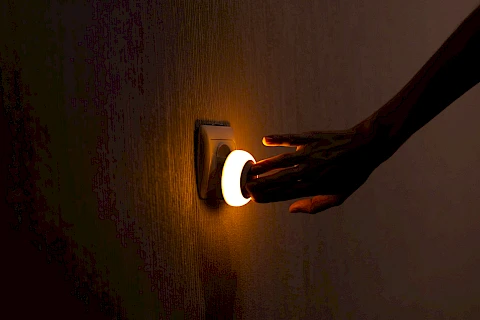
- Install motion sensors in hallways and bathrooms for nighttime convenience.
- Use sheer curtains in kitchens and sunrooms to minimize glare.
- Place anti-glare mats under lamps to avoid reflections from shiny countertops.
- Avoid unshaded bulbs indoors to prevent halo effects.
Contrast Beats Cleverness
When adapting homes for seniors with low vision, low-contrast decor is one of the most overlooked fall risks. Here are some suggestions to consider:
- Swap in dark plates for light food and light plates for dark food to keep items visible.
- Wrap colored tape around light switches, door frames, and stair edges.
- Paint the wall behind a white toilet a medium color so it stands out clearly.
- Mark oven dials with bump dots, and uses black cutting boards for light foods and white ones for dark foods.
- Follow the room-by-room checklist from organizations like the American Academy of Ophthalmology to guide home updates.
Organize for Muscle Memory
When eyesight fades, memory picks up the slack. Here are ways to ensure muscle memory:
- Keep daily essentials in consistent spots, such as hanging keys on a door hook, storing reading glasses in a specific top drawer, and keeping daily medication in a clear, labeled basket.
- Remove throw rugs, low ottomans, coffee-table clutter, and loose cords along baseboards to prevent trips and stumbles.
- Group clothing by type, such as tops on the left and bottoms on the right, to make dressing straightforward.
- Use speech devices and place bump dots or tactile stickers on high-use dials, such as those on microwaves and washing machines, to keep household management accessible.
Adjusting Bathrooms and Stairways
When adapting homes for seniors with low vision, bathrooms deserve their own pass. A few things you could do for the bathroom:
- Add grab bars near the toilet and inside the shower
- Install a raised seat
- Choose a shower chair with a contrasting color against the tile
- Add a non-slip mat with a bright border, which reads clearly to failing eyes
For your home's stairway:
- Mark the top and bottom step with tape
- Add a second handrail if there's only one
- Keep a stair light on a dusk-to-dawn timer
We Encourage Adapting Homes for Seniors With Low Vision
Small changes add up faster than most families expect, and a fresh set of eyes often catches what a longtime resident stopped noticing. Senior Helpers Central Maryland collaborates with caregivers in Pikesville, Owings Mills, Woodstock, and Windsor Mill to plan home modifications and provide daily support. If you'd like an in-home walkthrough to spot eyesight-related risks before the winter dark sets in, contact us to set up a visit.