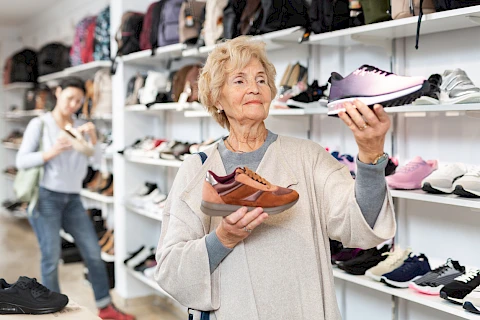
The shoes you wear can affect how steady you feel when walking. Loose, worn, or slippery shoes can make it harder to keep your balance and increase your risk of falling. September is Fall Prevention Month, making it a good time to take a closer look at the shoes you wear every day. Knowing what features to look for and which styles to avoid can help you choose footwear that keeps you comfortable and steady on your feet.
What to Look for in a Shoe
A good pair of shoes should keep your feet supported and give you a steady base when you walk. When choosing everyday footwear, pay attention to the following features:
- A firm heel counter: This is the part around the back of the heel. It should feel sturdy and hold your heel in place without rubbing or pressing against your foot.
- A stable sole: Look for a sole that gives you a solid base without being overly thick or uneven. A shoe that feels stable when you stand and walk is less likely to make you feel off balance.
- Good traction: Choose soles with visible tread patterns that grip the floor. Smooth soles can be slippery on tile, wood, pavement, and other surfaces, especially when they are wet.
- A secure closure: Laces, Velcro, and adjustable straps can keep a shoe in place as you walk. Loose slip-on shoes, slides, and backless styles can move around or come off your feet, making them less stable.
Shoes and Styles to Avoid
Some types of footwear can make it harder to walk safely. Flip-flops can move around on your feet and may cause you to grip them with your toes as you walk. Backless slippers and loose slides can also come off easily, especially on stairs or when walking quickly.
Pay attention to older shoes, too. Even a pair that once fit well may no longer provide enough support if the sole has become worn or the shoe has lost its shape. If you wear dress shoes for special occasions, choose a pair with a lower, stable heel and a secure fit. You may also want to limit how long you wear them.
Getting the Right Fit
Feet can change with age, including changes in width, length, and shape. Have your feet measured when you shop for new shoes, especially if it has been several years since you were last measured. If you use orthotics, braces, or other inserts, bring them with you when trying on shoes. If you have diabetes or another condition that affects your feet, talk with your doctor or foot-care specialist about the type of footwear that is appropriate for you.
Check Your Shoes Regularly
You do not need to wait until a shoe falls apart before replacing it. Check the soles regularly for worn or smooth areas. The footwear you wear around the house matters just as much as what you wear outside. Keep a supportive pair of shoes or slippers with a nonslip sole available for everyday use instead of walking around in socks. Before putting on your shoes, check that nothing is inside them. A small object or bunched-up sock can make your foot sit unevenly and affect your balance.
Stay Steady on Your Feet with a Little Help From Senior Helpers
The right footwear is one part of staying safe and steady at home. If you could use help with daily routines, safe support around the house, or a companion for shopping trips this fall, our team at Senior Helpers Southern Georgia is close by. We serve seniors in Albany, Tifton, Thomasville, Moultrie, and Valdosta with in-home care that keeps everyday life going strong. Contact us today!