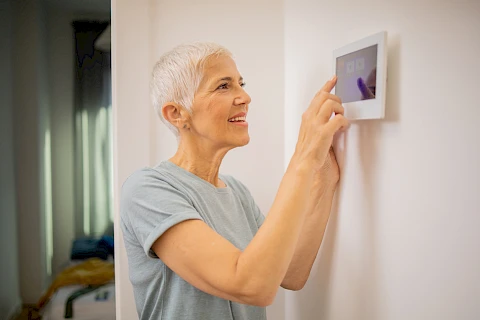
If your power bill in Snellville jumps every time the weather flips, you're not imagining it. Georgia falls into that stretch where September mornings can be cool and afternoons still hit the 80s, and heating and cooling settings tend to drift with the day. A programmable thermostat solves a good chunk of that quietly, without asking you to fiddle with the dial every few hours.
What a Programmable Thermostat Actually Does
A programmable thermostat is a small computer that changes the temperature on a schedule you set. Think of it as a slow cooker for your house. You tell it when you're usually home, when you sleep, and when the house is empty. It handles the rest.
The ENERGY STAR program estimates households can save about 10 percent a year on heating and cooling by setting the thermostat back 7 to 10 degrees for eight hours a day. On a monthly bill in the low-to-mid three figures, that adds up fast. Over a full year, it can cover a few tanks of gas and a nice dinner out.
A Simple Schedule That Works Most of the Time
Start with four periods: wake, day, evening, and sleep. That's it. Programming beyond four windows tends to confuse things and rarely saves more money.
Wake at 6:30, cool to 74 in summer or heat to 68 in winter. Day at 9, drift up to 78 in summer or down to 62 in winter while you're out. Evening back to a comfortable setting an hour before dinner. Sleep, cooler in summer, cooler in winter too since a slightly cooler bedroom tends to help sleep quality.
If you're home most of the day, keep the day setting closer to your evening setting. The savings still come from the sleep setback and from not overshooting either direction.
Picking a Thermostat That Fits How You Use It
Big, clear buttons matter more than app features for a lot of us. If you don't use a smartphone often, look for a basic 7-day programmable model with a bright display. If you do want an app, a smart thermostat lets you check settings from a chair without walking to the hallway.
Look for a model with a hold button. Life happens. When guests arrive, or the weather does something surprising, hold overrides the schedule until you release it.
A qualified electrician or HVAC technician can help with installation if the wiring or system setup is unfamiliar. Georgia Power currently offers rebates on qualifying smart thermostats, including up to $150 through its Home Energy Improvement Program and instant-rebate options on some models. Eligibility and amounts can vary, so check the current program before buying.
Small Habits That Stretch the Savings
Close blinds against afternoon sun in September, when the west light still hits hot. Open windows on a cool morning when the air outside is 65, and the air inside is 72. Change the air filter every three months, or monthly if anyone in the house has asthma or bad allergies. A dirty filter makes the system work longer to hit the same temperature.
Ceiling fans help too, but only when you're in the room. Fans cool people, not spaces. And if you eventually switch to a smart thermostat, look for an ENERGY STAR-certified model. Certified smart thermostats use real-world performance data to demonstrate energy savings, averaging about 8 percent on heating and cooling bills.
Comfortable Homes Across East Metro Atlanta
Setting up a schedule and picking the right model can be a lot to sort out on your own. If you or a parent in Snellville, Norcross, Decatur, Tucker, Lilburn, Clarkston, Pine Lake, Scottdale, or Stone Mountain would like a hand with the thermostat, filter changes, or other small home tasks that keep bills manageable, our Senior Helpers East Metro Atlanta team is here. To talk about what kind of support fits, contact us, and we'll start with the small changes that make the home easier to manage.