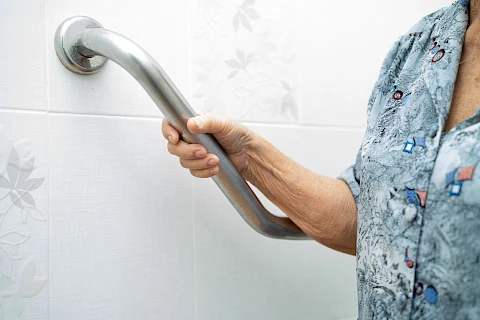
Falls are the leading cause of injury among older adults, often occurring at home in familiar spaces. This familiarity can lead to neglecting potential hazards like clutter or poor lighting. A thorough room-by-room check can help address these risks. June is Home Safety Month, making it the perfect time to take senior fall prevention seriously with an honest, room-by-room assessment.
Bathroom: The Highest-Risk Room in the House
Senior fall prevention starts in the bathroom, where hard surfaces, water, and tight spaces combine to make it consistently the most dangerous room for older adults. Secure the bathroom with these essential upgrades:
- Secure bars beside the toilet and inside the shower by anchoring them to wall studs to provide reliable weight-bearing support.
- Add a shower bench and a handheld showerhead so your loved one can bathe comfortably and safely while seated.
- Use non-slip mats inside the tub, swap out loose or rubber-backed floor rugs for textured, non-slip strips, and remove all loose rugs.
- Frame bathroom changes around independence and leverage rather than physical decline to make the modifications easier to accept.
Bedroom and Hallways: The Night-Time Hazard Zone
Most household falls occur during late-night or early-morning trips to the bathroom when grogginess combines with low visibility. Minimize nighttime hazards with these targeted adjustments:
- Plug inexpensive, motion-activated night lights along the hallway and bathroom path to automatically illuminate the walkway without harsh overhead glare.
- Attach a stable bed rail or grab bar to the bed frame to provide your loved one with a secure point of leverage when sitting up or standing.
- Remove all potential tripping hazards, including shoes, loose cords, and stray clutter, to ensure a completely direct route to the door.
- Swap out dim bulbs for brighter LED options in the hallway, and consider using a remote-controlled lamp if the main light switch is out of reach from the bed.
Kitchen and Living Areas: Everyday Exposure
The kitchen and living room host constant movement throughout the day, making them frequent sites for accidental trips and strains. Keep these high-traffic spaces secure with these adjustments:
- Place frequently used dishes and foods where they can be reached without stretching overhead or bending down to low cabinets.
- Keep a sturdy chair near the kitchen counter to offer a safe place to rest mid-task, and secure any loose flooring edges immediately.
- Position living room furniture to create wide, clear walkways, and run all lamp and phone cords along walls rather than across traffic areas.
- Consider walking through the home with a home care professional, a common practice that helps families with senior fall prevention, spotting environmental hazards they often overlook.
Bringing Your Loved One on Board With Senior Fall Prevention
Resistance is common and understandable. Your parent may hear "home safety modifications" as "I think you're fragile." The CDC's STEADI initiative offers provider-facing resources you can reference to show that fall prevention is standard medical practice, not an overreaction. Walk through the home together and let your loved one weigh in on solutions; people support what they help create.
Helping Sunrise-Area Families Stay Safe at Home
Whether your family is in Sunrise, Davie, Plantation, or Weston, the team at Senior Helpers Sunrise understands how much thought goes into keeping a loved one safe and independent at home. Contact us today to learn how our in-home care team can support your family with safety assessments, companionship, and hands-on daily assistance.