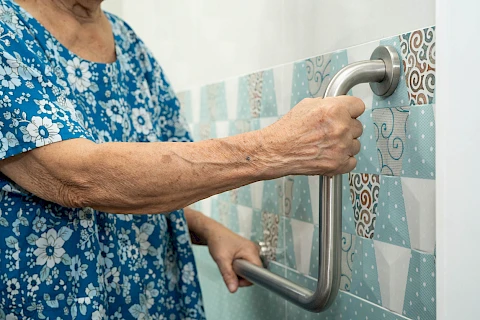
September is Fall Prevention Month. A walk-through of your senior loved one’s home is one of the highest-value hours you can spend this month. Falls send older adults to the emergency room every year, and most of them happen at home. Let’s go through this practical home guide to identify hazards and protect our loved ones’ safety.
Prepare a printable checklist before starting. Write it all down. Make two columns: fixes you can do (rugs, cords, lightbulbs) and fixes that need help (grab bars, ramps, better lighting).
Front Walk to Front Door
Driveways can be uneven brick pavers, and front steps often carry a coat of salt dust that gets slick after rain. Look for loose pavers, cracked concrete, a doormat that curls at the edges, and burned-out lightbulbs.
Add motion-activated lights at the porch and the garage door. Consider a second handrail on the front steps. Trim the plant that's crowding the walkway.
If the mailbox is at the curb, a small change like a covered slot by the door means fewer risky trips down the driveway. Check the CDC's STEADI initiative on older adult fall prevention.
Living Room, Kitchen, and Hallways
Rugs are the single biggest hazard in most living rooms. Roll up the throw rug in front of the sofa or secure it with double-sided tape. Remove all loose rugs. Move the coffee table six inches away from the traffic path. Add a lamp near the entry so no one walks into a dark room.
In the kitchen, put daily-use dishes between waist and shoulder height—no stepstool needed. Put a non-skid rubber mat in front of the sink. Store the heavy stand mixer on a lower shelf.
Hallways need light and clear space. Add plug-in nightlights that stay on all night. Move the laundry basket, the umbrella stand, and the pile of shoes. Anything that lives on the floor along a walking path is a tripping risk after dark.
Bathroom: The Highest-Priority Room
Most home falls happen in the bathroom, and it's the room worth investing in first. Install grab bars beside the toilet and inside the shower. Use real ones screwed into studs, not suction cups.
Add a non-slip mat inside the tub and a bath rug with a rubber backing outside it. Consider a shower chair and a handheld showerhead; both make bathing safer and gentler. If the toilet sits low, a raised seat with side handles helps arthritic knees.
Keep a nightlight on. It helps bathroom trips at 3 a.m.
The Bedroom
Clear the path from the bed to the bathroom. A lamp within arm's reach of the pillow, a landline or charged cell phone on the nightstand, and shoes with backs (never backless slippers) beside the bed. A closet rod at a reachable height. A firm chair to sit on while dressing.
We Can Help!
Our team at Senior Helpers Coral Gables walks through these assessments with families in Key Biscayne, Miami, and Coral Gables, and we can pair a caregiver with your senior loved one for the hours around bathing, bedtime, or the early morning when falls are most common. Contact us today to discuss a care plan that matches your needs.