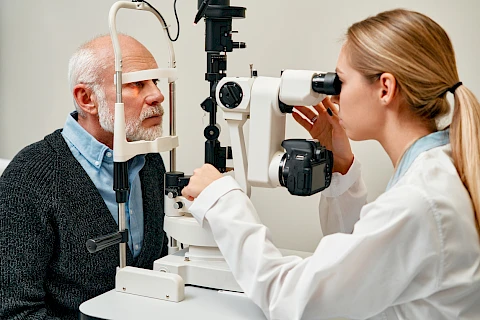
August is National Eye Exam Month, a helpful reminder that regular eye care is part of staying healthy as you age. Eye exams are not only about updating glasses. They can also help identify changes and conditions that may affect vision over time.
Put Eye Visits on the Calendar
Adults over 60 should generally have a comprehensive dilated eye exam every one to two years, although the right schedule depends on health history, vision changes, and individual risk. If you already wear glasses or contacts, ask at each visit when the next exam should be. The National Eye Institute explains why regular checks matter as people age. A complete exam can also show changes inside the eye that you cannot see in a mirror, which is why an appointment matters even when your glasses still seem to work well.
Do not wait for blurry print. Glaucoma, cataracts, diabetic eye disease, and other concerns can develop before a person notices a major change, so an exam looks beyond the prescription. Tell the clinician about headaches, halos around lights, falls, trouble driving after dark, or a new need for brighter lamps.
Keeping the date on a paper calendar or phone reminder can make the next visit easier to remember among other appointments, errands, and family plans.
Some People Need Closer Follow-Up
Diabetes, high blood pressure, glaucoma in the family, previous eye surgery, and certain medicines can change the schedule. An eye-care professional may recommend more frequent visits to watch for changes that a routine glasses check could miss. Bring a list of medicines and any previous eye diagnoses.
Glasses need attention, too. A scratched lens, loose frame, or prescription that no longer feels right can make reading and walking safely harder than they need to be. A visit after a fall or a noticeable change in vision may also be worth arranging promptly, even if the last exam was recent.
Ask why a shorter follow-up interval is recommended when it applies to you. Your eye-care professional can explain what they are monitoring and how often it should be checked.
Make the Appointment Easier to Keep
Choose a time when you are usually alert, then arrange a ride if dilating drops will affect driving. Bring sunglasses for the trip home because the Colorado sun may feel especially bright afterward. It also helps to write down two or three questions before you leave, since appointments move quickly.
Family members can help without taking over. Offer to book the visit, sit in on the discussion if asked, or make sure the clinician knows about changes noticed at home. The person getting the exam should still have room to describe what they are seeing and what is getting harder.
Plan transportation ahead of time if dilation is expected. Drops may temporarily blur close vision and increase sensitivity to light, so knowing how you will get home can make the appointment less stressful.
Clearer Days Around Boulder County
An eye exam supports ordinary parts of the week, from reading a recipe in Boulder to spotting the curb in Lafayette or finding a familiar shop in Louisville. Vision affects many small choices. Regular exams give you a chance to raise concerns before those changes begin interfering with familiar routines. Save the notes. A brief record of the diagnosis, next appointment, and questions to ask can make the follow-up conversation with family much clearer.
Senior Helpers Boulder can help families in Arvada, Boulder, Broomfield, Lafayette, and Louisville with daily support that respects the person’s own preferences. Contact us to discuss in-home senior care and support that may be useful.