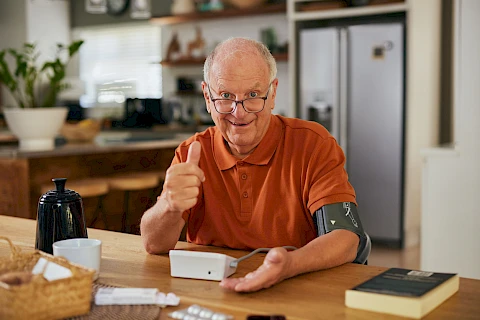
February is American Heart Month, a time dedicated to focusing on heart health and learning more about it. As seniors age, blood pressure monitoring becomes increasingly essential. We're here to help you learn more about the importance of blood pressure monitoring, how to choose the right monitor, and how to keep track of your blood pressure over time.
Why Regular Blood Pressure Monitoring Matters
Blood pressure is the measure of the force exerted by blood against the walls of your arteries. High blood pressure, or hypertension, can lead to serious health issues if left unchecked. For seniors, maintaining a healthy blood pressure supports heart health and helps reduce concerns like heart disease and stroke. Regular monitoring enables early detection of changes that may indicate health problems. With consistent readings on hand, a doctor can spot patterns sooner and adjust care when needed.
Choosing the Right Blood Pressure Monitor
Selecting the appropriate blood pressure monitor is the first step in effective monitoring. There are several types available, including digital monitors and manual monitors. Digital monitors are easy to use, display results on a screen, and often include memory to track readings over time. Manual monitors require a stethoscope and sphygmomanometer, which might be challenging for some seniors to use.
Key features to consider for seniors include large, easy-to-read displays, memory storage, and user-friendly interfaces. Reliable brands to explore include Omron, Welch Allyn, and A&D Medical. A properly fitting cuff also matters, since an incorrect size can affect accuracy.
How to Take Accurate Blood Pressure Readings
Taking blood pressure readings correctly helps keep results consistent. Prepare for the measurement by sitting comfortably and resting for at least five minutes. Ensure your arm is supported at heart level. Then:
- Sit in a chair with your feet flat on the floor.
- Place the blood pressure cuff snugly around your upper arm.
- Press the start button on the digital monitor or follow manual instructions.
- Keep still and avoid talking during the measurement.
Avoid common mistakes such as taking a reading right after exercise, talking during the measurement, or placing the cuff over clothing. Try to take readings around the same time each day for a clearer comparison.
Interpreting Your Blood Pressure Readings
Understanding your blood pressure readings can make follow-ups simpler. Blood pressure is recorded with two numbers: systolic over diastolic. The systolic number, which appears on top, indicates the pressure in your arteries when your heart beats. The diastolic number, shown on the bottom, measures the pressure between beats.
A reading below 120/80 mmHg is considered normal, 120-129/80 mmHg is elevated, and 130/80 mmHg or higher may be high. Keeping a log of your readings helps you track changes over time. Write down the date, time, and any notes like stress, poor sleep, or a new medication.
When to Contact a Doctor
Contact a doctor if you notice consistently high readings or a sudden spike. Watch for symptoms such as severe headaches, vision problems, or chest pain, which require immediate medical attention. Regular check-ins with healthcare providers are also advised for continuous monitoring and guidance. If numbers change sharply from your usual range, call for advice even if you feel okay.
Support That Makes Daily Tracking Easier
Monitoring blood pressure at home is a simple step that helps families stay aware of changes early. A steady routine, accurate readings, and a clear log can make medical conversations more productive.
If you or a loved one could use extra support at home, Senior Helpers Marin County can help in San Rafael, Belvedere Tiburon, Marin County, Mill Valley, and Sausalito. Ask about Personal Care for day-to-day assistance, Companion Care for routine support and check-ins, or Chronic Disease Care for added help managing ongoing health concerns. Contact us to discuss care options that fit your household.