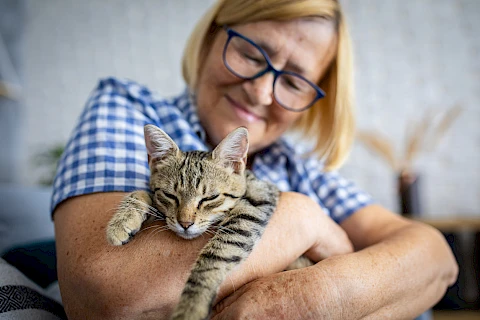
As seniors age, long walks with an energetic dog may feel more tiring, but having a pet can still bring joy and companionship. Pets for seniors, such as a calm cat, a small older dog, or a pair of finches, can bring comfort and companionship to a quiet home. The key is choosing a pet that matches a senior's energy level, living space, and health needs.
What Companion Animals Offer
A dog may greet a senior at the door after a trip to the market, while a cat curls up beside them during the evening news. These small moments can bring warmth and comfort to a quiet home.
The Human Animal Bond Research Institute shares research on how relationships with animals may affect human health, including loneliness and well-being among older adults. Findings vary, but many pet owners say their homes feel less lonely when a pet is around.
Pets can also encourage social interaction. Seniors who walk their dogs may strike up conversations with other pet owners, while family members often enjoy seeing a beloved cat or dog during video calls. Choosing suitable pets for seniors can bring companionship and create more opportunities to connect with others.
Comparing Common Choices
Choosing pets for seniors involves considering the animal's daily care needs, temperament, and expected lifespan. The right companion should fit a senior's lifestyle, living space, and ability to manage feeding, grooming, and other tasks.
- Adult or senior dogs. Older dogs are often calmer than puppies and may need less training. Small breeds are easier to lift, but their energy levels vary. Daily walks help seniors stay active and enjoy fresh air.
- Cats. Cats do not need daily walks and often adapt well to apartment living. However, cleaning the litter box may strain the back or knees, so a raised litter tray or help with cleaning may be useful.
- Birds. Parakeets and canaries bring cheerful sounds into the home and need less space than many other pets. Larger parrots may live for decades, so seniors should consider who could care for the bird if their circumstances change.
- Fish. Watching fish swim can create a calming atmosphere, and they require little direct interaction. However, aquariums require regular cleaning and water changes, which may involve lifting heavy buckets. A smaller tank or help with maintenance can make care easier.
Questions to Answer Before Adopting
Before adopting a pet, seniors should consider how easily they can fill a food bowl or clean a litter box and whether they can afford monthly veterinary expenses. Seniors should check building rules about pets and decide who can care for the animal during illness or an unexpected move.
A simple care plan can help keep pet care organized. Include the veterinarian's contact information, feeding schedule, and a trusted person's name and spare key details for emergencies.
Many shelters and rescue groups help seniors find older pets, sometimes with reduced adoption fees. Shelter staff can explain each animal's temperament and care needs, so seniors should ask questions and consider visiting more than once. A quiet visit with a pet helps seniors see whether they feel comfortable with the animal before adoption.
If Owning a Pet Isn't Practical
Pet ownership may not suit every senior. Spending time with a neighbor's dog, volunteering at an animal shelter, or welcoming visits from a therapy animal program can still provide comfort and companionship. The National Institute on Aging's tips for staying connected offer other ways for seniors to ease loneliness, including volunteering and taking part in community activities.
Discover Pet-Friendly Companionship From Senior Helpers
Our caregivers are happy to share a home with a four-legged roommate. Senior Helpers South Valley provides companionship, help with daily tasks, feeding reminders, and a steady hand on short walks for older adults in Encino, Tarzana, Reseda, and Lake Balboa. Contact us to learn how we can support you and your pet at home.