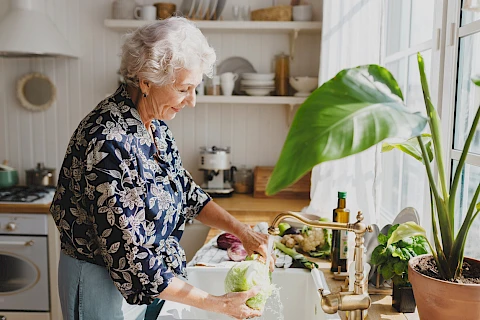
San Fernando Valley weather can make kitchen safety tricky. Warm afternoons can speed up food spoilage. Cooler evenings can also affect how long food stays at room temperature. Adults over 65 face a higher risk of serious illness from foodborne bacteria, so food safety for seniors deserves extra attention. A few simple kitchen habits can help keep meals safe.
Why Foodborne Illness Hits Seniors Harder
The immune system becomes less effective with age. Stomach acid also decreases, so fewer harmful bacteria are killed before they reach the intestines. A bout of food poisoning that leaves a younger adult sick for an afternoon can cause a much more serious illness in an older adult.
Food safety for seniors includes extra care with higher-risk foods. These include raw or undercooked eggs, unpasteurized milk and cheese, cold deli meats, raw sprouts, and cut melons left at room temperature. The CDC's food safety guide has a helpful list that families can keep on the fridge.
Canned foods also need a quick check before use. A bulging lid or a deep dent along the seam means the can is unsafe to use. Botulism is rare, but damaged cans can carry this serious risk.
The Refrigerator Rules That Matter Most
Keep the refrigerator at 40°F or below and the freezer at 0°F. Keep the refrigerator at 40°F or below and the freezer at 0°F. A refrigerator thermometer lets seniors check the temperature without guessing.
Refrigerate leftovers within two hours of cooking. If the kitchen is above 90°F, refrigerate them within one hour. Eat leftovers within three to four days. When in doubt, throw them out.
Label containers with the date. Keep masking tape and a marker near the refrigerator for easy labeling. If no one remembers when Wednesday's soup went into the refrigerator, it is safer to skip it.
Safe Handling in the Kitchen
Food safety for seniors starts with a few simple kitchen habits. Wash hands with soap for at least 20 seconds before cooking. Wash them again after handling raw meat, poultry, eggs, or seafood.
Use separate cutting boards for produce and raw meat. If there is only one board, wash it thoroughly before using it again. Both wooden and plastic boards work well, but plastic boards can go in the dishwasher for easier cleaning.
Cook meat to a safe internal temperature: 160°F for ground beef, 165°F for chicken, and 145°F for fish. A meat thermometer can show whether the food has reached the right temperature. Reheat leftovers to 165°F, or until they are steaming hot.
Shopping and Storage Habits
Food safety for seniors also starts at the grocery store. Shop with a list and pick up refrigerated and frozen items last to keep them cold. If the trip home takes more than 30 minutes, use an insulated bag with an ice pack for perishable foods. Traffic can make a long drive home risky for raw chicken in a warm car.
Check expiration dates before buying and again at home. Keep older pantry items in front and use them first.
Freeze meat within two days if it is still unused. Thaw it safely in the refrigerator overnight rather than on the counter. These small habits can help reduce food safety risks.
Senior Helpers Can Assist With Meal Planning and Preparation
A few consistent habits at the counter and in the fridge protect seniors far more than most people realize, and they cost nothing. Our team at Senior Helpers South Valley supports older adults across Encino, Tarzana, Sherman Oaks, Van Nuys, and Lake Balboa with meal prep, grocery runs, and daily household support that keeps kitchens safe and stocked. Contact us to learn more about our in-home care services.