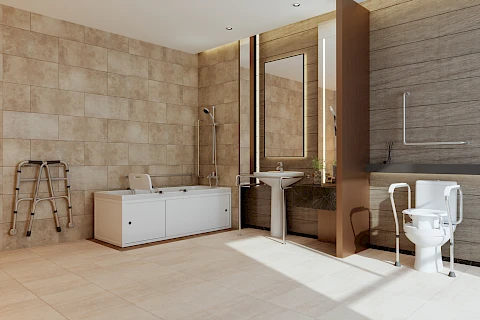
Grooming and personal hygiene can be challenging as balance, strength, or eyesight changes. Small adjustments to the tub or shower can help prevent falls while maintaining a familiar routine. Senior Helpers suggests changing the part that feels shakiest before changing anything else. This ensures bathroom safety for everyone in the home.
Set the Room Up First
Getting ready for a shower or bath is all about bathroom safety at any age. Taking a few simple steps to prepare the room before the water runs can keep your routine relaxed and slip-free.
- Wipe up any drips, swap loose rugs for non-slip mats inside and outside the tub, and turn on bright lighting so you can clearly see what is underfoot.
- Ensure grab bars are securely fastened to wall studs and verify that shower chairs sit completely level without rocking. The CDC provides fall-prevention information that can help you review bathroom and household hazards.
- Set out your towels, soap, clean clothes, and a phone before you get in so you don't have to make extra trips across wet tile.
Pick a Routine That Fits Today
Bathing doesn't need to look the same as it used to it just needs to fit how you are feeling today. Making a few tweaks to your routine can help you stay comfy, safe, and independent.
- Use a shower chair, wash at the sink, or opt for a shorter shower when your joints ache. There is no need to push through a standing routine if sitting feels better.
- Beat the desert heat in Indio, Coachella, or Palm Desert by showering during the cooler morning hours before heat or house busyness wears you out.
- Use liquid soap in a pump bottle to prevent slips, and consider a long-handled sponge for hard-to-reach areas. Keep the water warm, not hot, to avoid feeling lightheaded.
- Start your routine fifteen minutes earlier than usual. Pacing yourself leaves plenty of room to sit, dry off, and dress safely without rushing.
Speak Up About Hard Steps
Talking about senior bathroom safety concerns helps prevent serious accidents. Knowing your limits and requesting small adaptations keeps you safe while preserving independence.
- Speak clearly about tough tasks—such as washing your back, stepping over a tub wall, drying off, or dressing—so family members or clinicians know exactly where you need support.
- Seek professional advice from an occupational or physical therapist immediately if you experience a fall, a near fall, new weakness, worsening pain, or difficulty stepping over the tub.
- Have someone stand in the doorway to spot subtle hazards you might miss, such as a cluttered hamper, an out-of-reach towel rack, or a curled bath mat corner.
- Create a simple habit if you live alone by texting a neighbor or family member right before you shower and sending a quick update once you are finished.
- Recognize that temporary issues like a stomach bug, medication change, or knee pain can alter your balance, requiring extra help or room adjustments until you fully recover.
Keep Bathroom Safety Part of Your Routine
Asking for help with bathing doesn’t mean losing independence. You can still participate in your personal care while getting assistance with the more challenging tasks.
Ask for help when you need it. Personal care support can include bathing, grooming, dressing, and safe movement around the home. Contact us to learn about support that fits your routine in Coachella, Indian Wells, Indio, La Quinta, and Palm Desert.