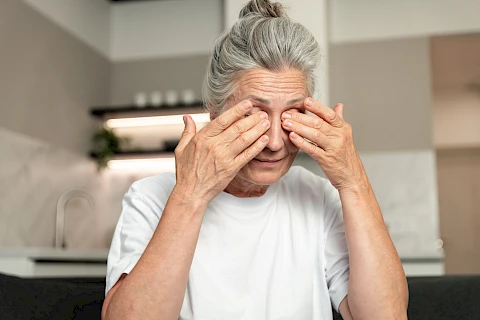
If your eyes have felt gritty by mid-morning, or you find yourself reaching for the artificial tears a dozen times a day, you're in good company. Dry eye is common after 60, and Arizona's low humidity does not help. National Eye Health Week runs September 21 to 27, and it's a fitting week to look at why older eyes dry out and what can genuinely help. Some causes are simple. Some deserve a call to your doctor.
What's Actually Happening on the Surface
Tears contain components that work together to keep the surface of the eye moist and protected, including oils that slow evaporation, a watery layer, and mucus that helps tears spread across the eye. When the eyes don't make enough tears, or the tears evaporate too quickly, the surface can become irritated and uncomfortable.
Age-related changes can contribute to dry eye, but persistent or worsening symptoms shouldn't simply be dismissed as part of getting older. Being unable to read the newspaper comfortably, or waking up with lids that feel sticky or irritated, is worth discussing with an eye care professional.
The National Eye Institute has a plain-English page on dry eye that explains the mechanics and lists warning signs worth a doctor visit.
The Usual Suspects Behind Dry Eyes
Reduced tear production heads the list. Meibomian gland dysfunction is the runner-up; those tiny oil glands along the eyelid margins get sluggish or clogged, and the tears you do have evaporate too fast.
Allergies are another common cause, especially in spring dust and fall pollen. Itchy, watery eyes are often dry underneath. So are the eyes of people who spend hours a day on a phone or laptop; we blink half as often on screens as off.
Medications are often the surprise. Antihistamines, some blood pressure pills, antidepressants, and diuretics can all dry the eyes. So can hormonal shifts after menopause. Bring your pill bottles to your next eye appointment and ask.
Environment does its share, too. Ceiling fans, forced-air heating, dry Sun City West afternoons, and the ceiling vents in cars all pull moisture out of the eye.
What You Can Try at Home This Week
Warm compresses work. Soak a washcloth in warm water, wring it out, and rest it on closed eyes for five minutes twice a day. The warmth softens the oils in those Meibomian glands, and the improvement is often noticeable within a week.
Preservative-free artificial tears, used four to six times a day, are gentler than the bottled kind with preservatives. Ask the pharmacist for the single-use vials.
Watch your indoor air. A cool-mist humidifier in the bedroom set to 40% helps. Aim ceiling fans away from your face. Take screen breaks: every 20 minutes, look 20 feet away for 20 seconds.
Blink. Full blinks, not the half-blinks we do at screens. Ten slow, deliberate blinks after a phone call resets the tear film.
When to Call the Eye Doctor
Some cases need real help. Book an appointment if the drops stop working, if the eyes hurt, if vision blurs and doesn't clear when you blink, or if the eyelids look red or crusted. Autoimmune conditions like Sjögren's, thyroid trouble, and blepharitis all show up first as dry eye.
Speak plainly with your doctor. Say what time of day is worst. Say what makes it better. Bring the medication list.
Clear-Eyed Care Across the West Valley
Our team at Senior Helpers Sun City West works with families in Sun City West and Surprise on the daily details that can make managing health needs easier, from medication reminders to rides to the ophthalmologist. If you'd like help fitting appointments and everyday support into a busy week, contact us today!