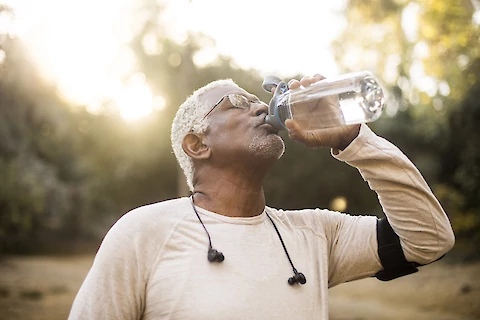
Most older adults can stay hydrated with water, milk, and everyday foods, but some situations call for an electrolyte drink. Vomiting, diarrhea, a fever, or a long afternoon in the Virginia summer heat can drain sodium and potassium faster than water alone can replace them. Choosing the right drink matters too, since many sports drinks are high in sugar, and seniors with heart or kidney conditions may need to limit sodium or potassium. Knowing when electrolytes help, and which kind to choose, keeps hydration safe.
What Electrolytes Do
Electrolytes are minerals, including sodium, potassium, magnesium, and chloride, that carry electrical charges in the body. They help control fluid balance, nerve signals, muscle contractions, and heart rhythm. When fluid levels drop, electrolyte levels shift too, which is why dehydration can cause weakness, muscle cramps, confusion, and an irregular heartbeat.
Older adults are more vulnerable to these shifts. The sense of thirst weakens with age, the kidneys conserve water less efficiently, and common medications like diuretics change how the body handles fluid and sodium.
When Seniors Should Drink Electrolytes
For everyday hydration, most seniors don't need special electrolyte drinks. A balanced diet provides plenty of sodium and potassium. Electrolyte drinks make the most sense during illness with vomiting, diarrhea, or fever, after heavy sweating on hot, humid days, and during recovery from mild dehydration. A doctor may also recommend them for specific conditions.
Seniors with heart failure, kidney disease, or high blood pressure, and those taking diuretics or potassium-sparing medications, should talk with their doctor before using electrolyte drinks regularly, since extra sodium or potassium can be harmful for them.
Gatorade vs. Pedialyte for Seniors
Oral rehydration solutions like Pedialyte were designed to replace fluids and electrolytes lost to illness. They contain more sodium and potassium and much less sugar than most sports drinks, which makes them a better choice for rehydrating a senior who has been sick. Sports drinks like Gatorade are made for athletes and contain more sugar, which can be a problem for seniors with diabetes. Low-sugar and zero-sugar versions of both are available. Store-brand oral rehydration solutions work the same way and usually cost less.
Natural Sources of Electrolytes for Seniors
Food is the best everyday source of electrolytes. Bananas, potatoes, oranges, spinach, avocados, and beans are rich in potassium. Milk and yogurt provide potassium, calcium, and fluid together. Broth-based soups supply sodium along with water, which helps after illness. Coconut water contains potassium and a small amount of sodium, though seniors who need to limit potassium should check with their doctor first.
The Best Way to Rehydrate an Elderly Person
When a senior is mildly dehydrated, offer small sips of fluid often rather than large amounts at once. An oral rehydration solution is the most effective choice after vomiting or diarrhea. Keep the drink within easy reach, use a cup with a straw or lid if hands are shaky, and track how much they drink and how often they urinate. Call a doctor if they can't keep fluids down, seem confused, feel faint, or have very little urine for eight hours or more.
How to Get Elderly Adults to Drink More Water
Many seniors don't drink enough simply because they don't feel thirsty. A water bottle with time markers, a favorite mug, or a glass kept in each room serves as a visual reminder. Flavoring water with lemon, cucumber, or berries makes it more appealing, and offering a drink with every meal, snack, and medication builds the habit. Water-rich foods, including melons, soups, and yogurt, count toward daily fluid intake too.
Hydration Help From Senior Helpers Blue Ridge
Keeping track of fluids is easy to overlook, especially for seniors who live alone. Senior Helpers Blue Ridge companion care caregivers offer drinks throughout the day, prepare hydrating meals, and let family know when a senior seems unwell, and chronic disease care supports seniors managing conditions like diabetes and heart failure at home. Contact Senior Helpers Blue Ridge to learn more.