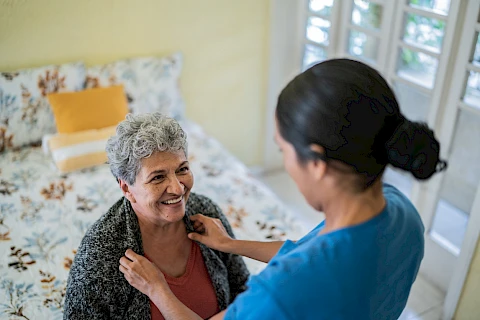
National Nurses Week is a good time to think clearly about the people involved in caring for an older loved one and what each does. Nurses and professional caregivers are both vital, but they work in different ways and address different needs. Knowing who does what helps families ask better questions, plan more effectively, and feel less confused when navigating care decisions.
What Nurses Do
Registered nurses and licensed practical nurses are trained medical professionals. In a home setting, a nurse might manage wound care, administer injections, monitor vital signs, or assess a change in a medical condition. Their work is clinical and often tied to a specific care plan ordered by a physician.
Nurses working in home health settings typically visit on a scheduled basis, sometimes two or three times a week, to handle tasks that require medical training and licensure. They document findings, communicate with doctors, and focus on medical stability.
Their expertise is irreplaceable for seniors recovering from surgery, managing complex conditions like congestive heart failure, or requiring skilled wound care.
What Professional Caregivers Do
Professional caregivers work in a different lane. They are present for daily life, helping with things like bathing, dressing, meal preparation, light housekeeping, and getting to appointments. They provide companionship through long afternoons and can be with a senior for several hours a day or around the clock.
Many families find that what their loved one needs most isn't medical intervention, but consistent, hands-on help with daily living. A caregiver notices that the client hasn't been drinking enough water, or that their mood has shifted, or that the back steps might be slippery after rain. That kind of attentive presence is its own form of care.
Caregivers from Senior Helpers remind clients to take their medications at the right times, though administering medications is the province of licensed medical staff.
How the Roles Work Together
The most effective care plans treat nurses and caregivers as complementary. A nurse might visit twice a week to check on a senior's wound healing; a caregiver is present every morning to help with breakfast, personal hygiene, and getting ready for the day. The two roles don't overlap as much as people expect.
Families often feel uncertain about which type of support to seek first. A good starting point is asking: Does my loved one need medical intervention, or do they need help with daily tasks and companionship? Seniors may need both, at different times or simultaneously.
Which Service Is Right for Your Situation?
Some situations clearly call for nursing care: post-hospitalization recovery, injections or IV lines, or monitoring of a specific medical concern. Others call for home care: progressive memory loss requiring supervision, mobility challenges that make bathing unsafe alone, or social isolation that has become a health concern.
When in doubt, your loved one's primary care physician can clarify what level of clinical oversight is appropriate.
Connecting Your Loved One With the Right Care
This Nurses Week, a sincere thank-you goes out to every nurse who has shown up for seniors and their families. Senior Helpers The Wasatch Mountain provides in-home care that complements medical care for seniors in Ogden, Park City, Layton, Kaysville, and Farmington. Contact us to talk through which kind of support best fits your family.