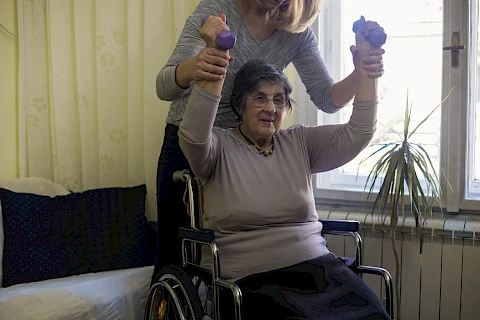
Parkinson's Disease (PD) is a neurological disorder that impacts movement, making daily activities challenging. As it progresses, it affects balance, coordination, and muscle function. Getting therapy for seniors with PD can help manage symptoms and improve the quality of life for those with the condition. Senior Helpers discusses the roles of physical and occupational therapy in managing this condition.
What is Physical Therapy?
Physical therapy (PT) focuses primarily on movement and physical capabilities. Here are a couple of ways this type of therapy addresses the challenges posed by neurological disease:
- Improving Mobility and Balance Exercises help reduce the risk of falls and increase confidence in moving around.
- Enhancing Strength and Flexibility. Strengthening muscles and improving flexibility can lead to better posture and can alleviate some symptoms associated with Parkinson's.
Physical therapy for seniors with PD helps them move safely and independently in their environment.
What is Occupational Therapy?
Occupational therapy (OT) focuses on helping individuals engage in meaningful daily activities. For those with Parkinson's disease, OT simplifies tasks and promotes independence in daily life.
- Daily Living Activities: Occupational therapists help older adults perform tasks. These include dressing, cooking, and grooming more easily and safely.
- Adaptations: Occupational therapists introduce simple tools and adaptations to enhance independence. These can be special utensil grips or aids to make dressing easier. These simple modifications can make a noticeable difference.
Occupational therapy for seniors with PD enhances autonomy and daily activity management. It empowers individuals to lead more active lives despite challenges.
Differences Between Physical and Occupational Therapy
Physical therapy focuses on movement and physical challenges related to Parkinson's, while occupational therapy emphasizes daily activities and functional independence. PT typically includes exercises, whereas OT may use tools or modify environments. Both aim to enhance the individual's quality of life but address different challenges.
How Physical and Occupational Therapy Complement Each Other
Together, physical and occupational therapy for seniors with PD provides a comprehensive approach to management. By emphasizing both movement and daily living skills, these therapies enhance overall quality of life.
The combination of improved physical abilities and adaptive strategies for daily tasks can create a fuller, more effective care plan. Each person's experience with Parkinson's is unique, so combining PT and OT services tailored to their needs yields the best outcomes.
Senior Helpers Offers Comprehensive Parkinson's Care
Both PT and OT offer significant benefits for people living with this neurodegenerative disease. By working together, therapy for seniors with PD offers a well-rounded approach to enhancing life.
We provide in-home healthcare services tailored to the needs of elderly individuals in Houston and Missouri City. Contact Senior Helpers Central Southwest Houston today.