For Alzheimer's and Brain Awareness Month, families caring for loved ones with Alzheimer's or dementia face new challenges in familiar spaces. A once-safe kitchen or staircase can become a risk as cognitive changes progress. The goal in providing home safety modifications isn't to create an institution; it's to keep the familiar environment genuinely secure while preserving as much independence and dignity as possible.
Addressing Wandering Risk
Wandering is a major safety issue for individuals with Alzheimer's or dementia, particularly near busy streets. Proactive home safety modifications can help manage this behavior and reduce immediate outdoor risks. Secure your home against wandering with these steps:
- Install Door Alarms: Use simple sensor alarms that chime when a door opens, immediately alerting caretakers without requiring constant surveillance.
- Add Passive Deterrents: Place door knob covers or install sliding bolt locks at non-obvious heights, ensuring they do not prevent quick emergency exits.
- Enroll in Support Programs: Register your loved one with the Alzheimer's Association Safe Return program to receive an ID bracelet, and sign up for local law enforcement's vulnerable persons database.
Room-by-Room Modifications
Home safety modifications are a necessary part of ensuring elderly loved ones are secure where they live. Here are some ways to get started:
Kitchen
Store cleaning products, sharp knives, and chemicals securely. Use stove knob covers or automatic shut-off devices to enhance safety. Keep frequently used items visible and easily accessible.
Bathroom
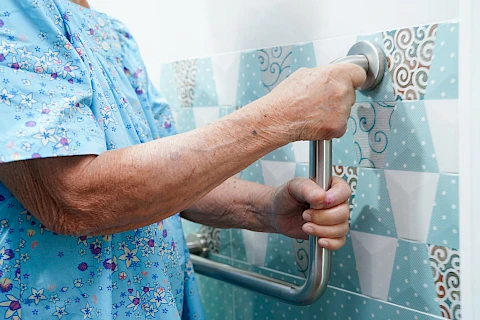
Install grab bars beside the toilet and inside the shower or tub. Set the water heater to 49 degrees Celsius (120 degrees Fahrenheit) or below to prevent scalding. A toilet safety frame aids transfers. Remove the lock from the bathroom door, or replace it with one that opens from outside, so a family carer can always assist.
Bedroom
Keep pathways clear and well-lit at night. A bed rail can help with repositioning, but consult a physician before adding one, as entrapment is a known risk with some designs. Keep the environment familiar; dramatic changes to furniture arrangement can increase disorientation.
Living Areas and Hallways
Reduce visual complexity. Remove mirrors if your loved one becomes frightened by their own reflection. Keep floors clear in high-traffic areas. In homes where open-plan layouts connect multiple rooms, consider using baby gates to limit unsupervised access to certain areas.
Using Technology Thoughtfully
Motion-sensor night lights reduce fall risk without requiring a caregiver to be physically present. Video monitoring inside the home can give family members who live at a distance greater peace of mind. GPS tracking devices worn as a watch or a clip are available for seniors who resist ID bracelets.
One principle worth keeping in mind: monitoring and modification should feel like care, not confinement. Involving your loved one in small decisions about the home, when possible, preserves their sense of agency.
Balancing Home Safety Modifications and Dignity
Home modifications for loved ones with dementia are most effective with consistent, trained care. Senior Helpers of Greater Arlington offers specialized in-home care for those with Alzheimer's or dementia. Our family carers are skilled in navigating these environments while treating every client with respect and warmth. Contact us to discuss a home care plan that keeps your loved one safe and comfortable.