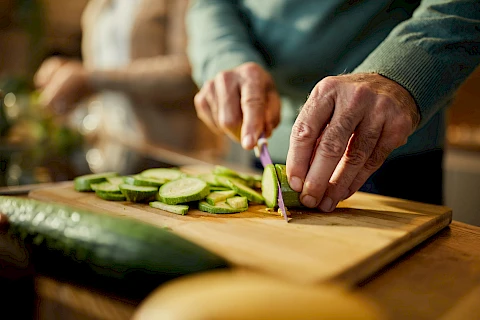
Preparing meals for one can be both enjoyable and practical for seniors living alone. Reducing recipes to single servings helps prevent waste, keeps ingredients fresh, and ensures every meal is satisfying. Adjusting measurements, choosing versatile ingredients, and adapting cooking techniques make it easier to enjoy favorite dishes while keeping portions manageable.
Recipe Scaling
Scaling down recipes is about adapting meals meant for a crowd into servings just for one or two. This ensures you can still enjoy those comforting, beloved dishes without making too much. When scaling down, maintain the original recipe's flavor and texture, even when cooking in smaller portions.
Converting Measurements
Scaling down recipes often starts with adjusting measurements. Understanding simple conversions makes it easier to reduce the amount of ingredients without affecting flavor or texture. Common conversions include:
- 1 cup = 16 tablespoons
- 1/2 cup = 8 tablespoons
- 1/4 cup = 4 tablespoons
- 1 tablespoon = 3 teaspoons
Recipes that call for fractions, such as 3/4 cup, can be converted into tablespoons—12 tablespoons in this case—so smaller portions remain accurate. Using standard kitchen tools like measuring spoons, liquid measuring cups, or a kitchen scale helps maintain consistency, reduce waste, and keep cooking straightforward. For ingredients that are difficult to split evenly, consider flexible alternatives, such as adjusting cooking times for smaller portions or using versatile ingredients that scale well.
Adapting Cooking Techniques
Cooking smaller portions often requires adjusting times, temperatures, and cookware. A reduced casserole or single-serving dish may finish in the oven faster than a full recipe, so monitoring progress frequently prevents overcooking or drying out. Choosing appropriately sized cookware—small pots, mini baking dishes, or individual pans—helps food cook evenly and maintain its texture. Appliances like toaster ovens, slow cookers, or air fryers can be more energy-efficient and better suited to single servings, allowing flavors to develop without excessive heat or waste. For stovetop cooking, lower the heat and simmer gently to preserve moisture and prevent delicate ingredients from overcooking, while stirring more often to ensure even cooking.
Maintaining Variety and Enjoyment
Cooking for one is a great opportunity to experiment with new ingredients and flavors. Selecting interesting spices can add a fresh twist to usual dishes, transforming a simple meal into something special. Fresh herbs are another excellent way to enhance flavor without adding extra calories, and they're often available in small quantities at grocery stores.
Don't be afraid to try new vegetables that you can buy in smaller portions to avoid waste. Many stores now offer pre-cut vegetables or smaller packages that are perfect for solo cooking.
Practical Tips for Solo Cooking
Batch cooking is a smart strategy for solo cooking. Prepare larger quantities of versatile ingredients, such as rice or beans, and freeze them in individual portions. This way, you have components ready for quick and easy meal preparations throughout the week. Consider investing in tools and gadgets designed for smaller cooking tasks. Items like mini-prep food processors, small sauté pans, and handheld blenders are perfect for one or two servings.
Get Assistance with Senior Meal Planning
Cooking for one allows seniors to enjoy familiar meals while keeping portions manageable and reducing waste. Scaling recipes, converting measurements, adapting cooking techniques, and exploring new ingredients make solo cooking both practical and enjoyable.
Seniors in Norman, Purcell, Blanchard, Chickasha, and Washington can benefit from Senior Helpers Norman, which provides personalized support with meal planning, grocery shopping, and preparation to make daily cooking simpler and safer. Contact us to see how our services can support independent living and help make mealtime more satisfying.