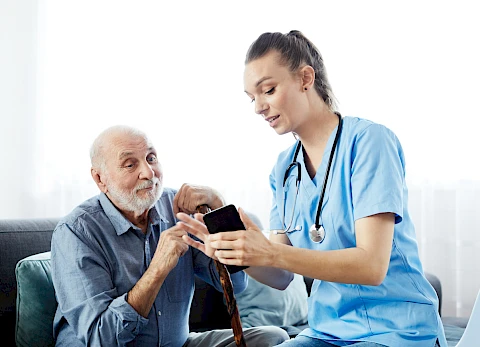
Safety Month in June is a useful prompt to look at one of the most important preparations any family can make: a clear, comprehensive emergency contact system for an older loved one. A lot of families have something informal in place, a phone number here, and a doctor's name there. But when an emergency actually happens, informal doesn't always hold up. The goal is a system that works when you're not in the room.
Who Belongs in the Network?
An emergency contact list for a senior should extend beyond the immediate family. The core should include at least two family members or trusted friends who can be reached quickly, along with their relationship to your loved one and multiple ways to contact them. But the list should also include your loved one's primary care physician, any specialists they see regularly, their pharmacy, and a trusted neighbor who lives close enough to respond in person if needed.
Think about who could physically get to your loved one within 20 minutes. Families across Avon, Avon Lake, and Berea often find that combining distant family (who handle coordination) with nearby neighbors or friends (who can respond in person) creates a much stronger network than relying on a single category.
What Emergency Responders Need to Know
When paramedics or emergency room staff arrive, they need information quickly and can't wait for family members to provide it. A medical information sheet, sometimes called a "go bag" document or a POLST (Physician Orders for Life-Sustaining Treatment), provides first responders with immediate access to the information they need.
This document should include a complete list of current medications with dosages, known allergies, significant medical history, any implanted devices (like a pacemaker), and the name and contact information for your loved one's physician. The American Red Cross recommends keeping this information in an easy-to-find, consistent location, such as on the refrigerator or in a marked binder near the front door.
It's a good idea to give a copy to multiple people in the network and keep a digital version somewhere accessible, such as a shared note or a cloud folder that trusted family members can open on their phones.
Technology That Strengthens the System
Several tools make emergency systems more reliable without requiring much technical knowledge. A medical alert device, the kind worn as a wristband or pendant, allows your loved one to call for help with one button press. Many newer models include fall detection and GPS tracking.
Shared family apps allow multiple people in North Ridgeville, Rocky River, Cleveland, and surrounding areas to stay informed without one person having to relay all the information. Even a simple shared note with updated medical information and emergency contacts reduces the friction when something goes wrong.
Review and update the system at least twice a year. Medications change, physicians change, and the neighbors your loved one relies on may move. A network that was accurate a year ago may have gaps now.
A Safety Network That Actually Works When Needed
Taking a few hours to build a thorough, organized emergency contact system can make an enormous difference for your loved one and for your own peace of mind. Senior Helpers of Western Cuyahoga and Lorain Counties supports families across Rocky River, Cleveland, Olmsted Falls and Township, Brookpark, and Westlake with in-home care designed to keep older adults safe. Contact us to learn more about how we support families in preparing for every season.