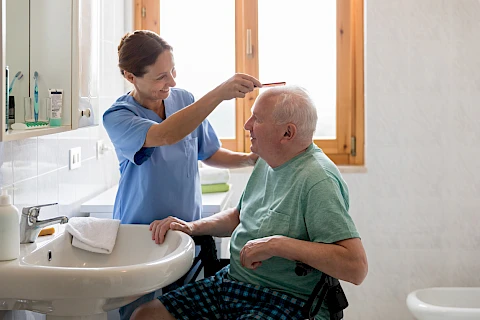
A change in hygiene habits can be an early sign that seniors may need more support at home. Skipped baths, stained clothes, or a lingering odor may point to pain, low mood, memory changes, or fear of falling in the bathroom. A gentle conversation, followed by a call to the primary care office, can be a helpful first step before making major changes to the routine.
Look for a Change, Not One Imperfect Day
A missed shower or wrinkled shirt happens to everyone. When considering hygiene for seniors, look for patterns in their daily routines and habits. Body odor, unchanged clothes, unwashed hair, mouth pain, or a bathroom that is getting harder to manage may show that a daily routine needs attention. Start with curiosity, because the reason may be pain, fear of falling, low mood, memory changes, or trouble reaching supplies.
Avoid assuming that seniors have stopped caring about their personal hygiene. Ask what feels difficult and listen to the answer. A parent may find the tub wall too high, feel unsafe in the water, or experience pain when bending to put on socks. These details can help you identify practical ways to provide support.
Focus on what you have noticed. Describing the change without calling your parent careless or unclean can create space for them to share what may be making hygiene more difficult.
Talk Without Taking Over
Choose a private, calm moment to bring up the topic. Keep your approach gentle. Try saying, “I noticed mornings seem harder lately. Tell me what would make them easier.” Then give seniors time to respond, even if the silence feels long.
Offer choices that help preserve a senior’s sense of control. A shower chair, fresh towels prepared in advance, a different time of day, or someone nearby for support may be enough. Try one change at a time. These can address barriers while helping seniors maintain their independence.
Notice Mood and Health Concerns
Changes in seniors' hygiene can sometimes appear with depression, though only a health professional can diagnose it. Withdrawal, low energy, changes in sleep or appetite, and loss of interest in usual activities are worth mentioning to a clinician. The National Institute of Mental Health provides information about depression and when to seek help.
A sudden change in behavior, confusion, fever, weakness, or difficulty managing basic tasks warrants prompt medical advice. Keep notes on what you notice and when the changes began. This gives the healthcare team useful details to review during an appointment.
Discover Personalized Care for Your Senior Loved Ones
When improving hygiene for seniors, start with tasks that cause the most difficulty and review approaches after a few days. Keep the plan personal and flexible. Families can take a gradual approach that respects each senior’s needs and preferences. A follow-up conversation can also show that the offer of help is real and that the senior still has a say in what happens next.
Senior Helpers Western Cuyahoga and Lorain Counties provides personal care support and in-home senior care for families in Avon, North Ridgeville, Cleveland, Olmsted Falls & Township, and Westlake. Contact us to discuss a respectful plan for seniors' daily routines.