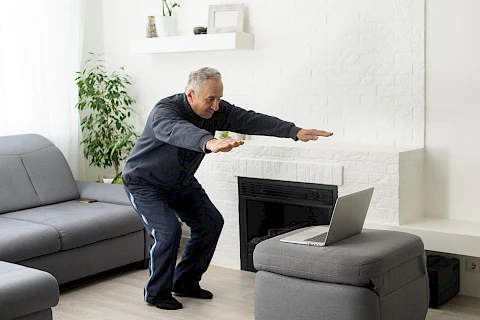
Shorter days, colder temperatures, and icy conditions often reduce daily activity for many older adults, which can affect strength, balance, mood, and energy levels. Incorporating daily movements for senior strength helps maintain muscle function, flexibility, and overall well-being even when outdoor activity is limited. Indoor exercises—whether through light strength work, chair exercises, or walking in climate-controlled spaces—keep the body engaged, support mental clarity, and provide rhythm to the day.
Benefits of Indoor Exercise for Seniors
Regular exercise offers numerous advantages, particularly for seniors. Engaging in indoor activities is an excellent way to maintain physical well-being. It helps seniors retain their strength, flexibility, and balance, which are essential for daily tasks and preventing falls. Beyond physical health, exercise provides significant mental health benefits, reducing stress, lifting moods, and boosting cognitive function. The social dimension of indoor exercise shouldn't be overlooked. Activities can serve as a fantastic way to meet new friends and stay involved in the community.
Mall Walking
Mall walking is an excellent option for seniors who wish to keep active in a climate-controlled environment. These expansive indoor spaces offer a safe, flat surface ideal for walking. Plus, they often provide benches for resting when needed. Local malls open their doors early to mall walkers, offering a warm and inviting place to stretch those legs.
Senior Center Programs
Senior centers host a variety of exercise programs catered to older adults. These programs might include gentle yoga, tai chi, or water aerobics, each encouraging movement in a supportive community setting. Participating in such programs not only increases physical activity but also provides a chance to build friendships and support networks.
Home-Based Activities
Chair exercises are perfect for seniors looking to enhance mobility and muscle strength from the comfort of their homes. Simple movements—such as seated leg lifts or arm circles—can be done while watching TV or listening to music. These exercises are especially valuable for those with limited mobility, making it easy to stay active without standing for long periods.
For tech-savvy seniors or those willing to learn, online exercise classes offer vast opportunities. Websites and platforms provide a range of senior-friendly classes, from guided dance sessions to balance and strength training. To get started, designate a safe space at home—clear of clutter and with necessary support structures—to enjoy these virtual workouts.
Creating a Routine
Maintaining regular movement helps preserve strength, balance, and energy during the colder months. Start with achievable targets, such as 15 minutes of seated or standing exercises three times per week, and increase duration or intensity gradually as comfort allows. Incorporating family, friends, or community programs can make activities more engaging and provide gentle encouragement. Scheduling sessions at consistent times—morning stretches, midday walks in indoor spaces, or evening chair exercises—supports continuity and helps build a lasting habit.
Supporting Winter Wellness with Senior Helpers of Portage / Geauga
Staying active during winter helps maintain strength, balance, and mental well-being. Indoor activities—mall walking, senior center classes, chair exercises, and home-based routines—offer safe ways to move even when outdoor conditions are challenging. Senior Helpers of Portage / Geauga can help seniors continue these activities by providing companionship and in-home assistance, including support for safe mobility, guided exercises, encouragement to participate in community programs, and help creating structured daily routines.
Combining personalized care with regular movement ensures seniors remain engaged, active, and independent throughout the winter months. Contact Senior Helpers to explore tailored support that promotes indoor activity, wellness, and social connection throughout the year.