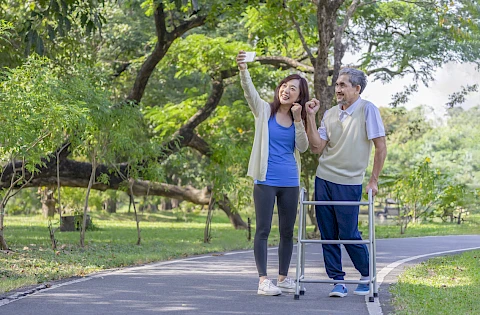
June is Men's Health Month. If you're helping a father, grandfather, or another senior man in your life stay active, you're doing something that genuinely matters. Staying physically active after 70 is one of the most effective ways to preserve independence, reduce fall risk, and support cardiovascular and cognitive health. The challenge is that many older men have complicated feelings about needing help with that. Understanding those feelings is where good support starts.
Working With Resistance, Not Against It
A lot of senior men grew up in a generation where asking for help or even admitting physical limitations felt like a weakness. If your loved one pushes back on the idea of assistance with exercise or resists going to a class or therapy appointment, that reaction usually has less to do with the activity itself and more to do with what accepting support means to him.
One of the most useful things you can do is frame activity as something you're doing together, rather than something he needs. Suggesting a walk through Montclair's local parks or a stroll through the streets of Verona positions you as a companion rather than a helper. That shift in framing matters more than you might expect.
Starting small and letting him lead the pace is also crucial. When a senior man feels in control of an activity, he's much more likely to keep doing it.
Appropriate Exercises and Working With Professionals
Not all exercise looks the same at 70-plus, and what works well for one person may not suit another. In general, a mix of three types of movement tends to be most beneficial: strength work (such as resistance bands or light weights), balance training (such as standing exercises or tai chi), and cardiovascular activity (such as walking, water aerobics, or stationary bike cycling).
A physical therapist can be genuinely valuable here. They can assess your loved one's current strength, balance, and any areas of concern, then create a program that's specific and safe. Many physical therapists in the Bloomfield, Caldwell, and Cedar Grove area offer programs tailored to older adults, and your loved one's primary care physician can provide a referral.
The American Heart Association recommends that older adults aim for at least 150 minutes of moderate-intensity activity per week, adjusted for individual ability. That's a general guide, not a mandate. What matters is consistent movement at a comfortable level.
Celebrating the Small Victories
Progress for a senior man in his 70s or 80s doesn't look like a marathon training plan. It looks like completing a walk that felt too long last month, or managing stairs with less effort, or feeling more stable getting up from a chair. Those are real victories, and they're worth naming out loud.
Men who feel seen and celebrated for their progress tend to keep going. A simple "you made it all the way to Essex Fells and back today; that's a real improvement" does more good than a lecture about health outcomes. Specific, genuine observations land better than general encouragement.
Supporting the Men Who Deserve to Stay Active
Physical activity after 70 is one of the best gifts your loved one can give himself, and your support makes a real difference in whether it happens. Senior Helpers of West Orange works with families across Bloomfield, Caldwell, Cedar Grove, Essex Fells, and Glen Ridge to provide in-home care that keeps senior men engaged and moving. Contact us this Men's Health Month to talk about how we can support your family.