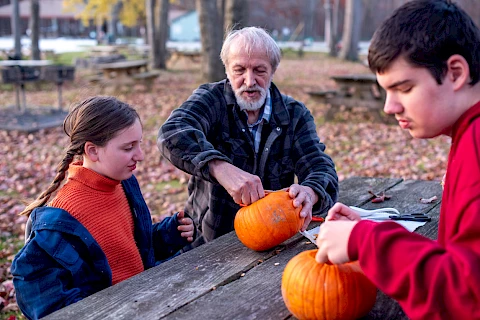
Halloween, with its spooky costumes, flickering lights, and bustling streets, can be a whirlwind of excitement and fun. But when you're caring for a loved one with Alzheimer's, the holiday can become uniquely stressful. The sensory overload, disruptions in routine, and emotional triggers can be challenging for someone with Alzheimer's. Balancing the needs of your senior loved one while also making the holiday enjoyable for your family becomes a priority.
The Challenges of Alzheimer's at Holidays
For seniors with Alzheimer's, Halloween can bring about sensory overload. The loud noises from doorbells and excited children, along with bright flashing lights, can be overwhelming. Unfamiliar costumes and eerie decorations only add to the confusion. Combine this with the disruption of the usual daily routine, and you have the recipe for potential agitation. Increased visitors from trick-or-treaters mean constant activity, and even the friendliest ghost costumes can be disorienting.
Emotionally, these changes can lead to anxiety and confusion. A loved one might feel lost in the commotion or become upset without understanding why. Knowing these challenges can help you prepare and plan to make the day easier for everyone involved.
Preparing for Halloween
One of the most effective ways to address these potential problems is through planning. Start by discussing Halloween and its events with your senior loved ones. Explain what will happen during the day, even if they have trouble understanding. Setting expectations for the entire family is also helpful; everyone should know what to expect and what behaviors to avoid.
Create a safe environment by adjusting decorations. Choose cheerful, less frightening decorations to reduce confusion. Ensuring there's a quiet room or space for the senior to retreat can also provide security. Encouraging your loved one to participate in Halloween activities is another way to make them feel included. Simple costume ideas, like hats or scarves that aren't restrictive, can help them join in without discomfort.
Balancing Caregiving and Family Fun
To ensure the day runs smoothly, coordinating with family members is necessary. Sharing caregiving duties also allows you to be part of your children's activities. Discuss who can stay with your senior loved one and at what times. This way, you ensure the caregiving burden doesn't fall on one person alone.
Managing your time effectively is a must, too. Prioritize integral tasks and events, allowing for flexibility. Halloween can be unpredictable, so having a plan B is always a good idea.
Tips for a Smooth Halloween
Effective communication with neighbors can significantly help manage Halloween night. Inform them about your loved one's condition. Most will be understanding and supportive. Providing awareness encourages patience and reduces unintended stress on your senior loved one.
Monitoring the seniors' well-being throughout the day is needed. Be aware of signs of stress or discomfort. Is your loved one suddenly quiet or unusually agitated? Maybe they're visibly disturbed by the noise or commotion outside. Offering reassurance and comfort, whether through words or soft music, can help soothe them.
Contact Care and Support Services in Bergen County
Managing a loved one's Alzheimer's care on Halloween might seem daunting, but with careful planning and understanding, it can be an enjoyable time for the whole family. Remember the importance of setting clear expectations, creating a safe space, coordinating care, and maintaining open lines of communication. If ever it feels overwhelming, don't hesitate to reach out for professional support.
Senior Helpers Bergen County is here to provide personalized caregiving solutions tailored to your needs in areas such as Passaic, Clifton, Hackensack, Teaneck, Paramus, and the surrounding regions. Contact us to learn more about our senior care services.