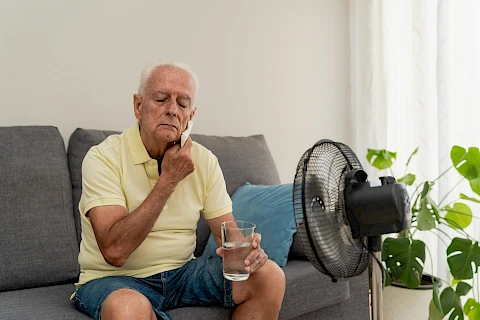
As we age, our bodies become more sensitive to temperature changes, making seniors vulnerable to overheating. Many people think of this as only an outdoor problem, but overheating indoors is also a serious concern. Caregivers and loved ones can help prevent overheating in seniors, promoting their well-being and comfort by understanding the risks and taking proactive steps. This issue is not limited to areas with extreme heat; the risk is there even in regions with moderate heat, as this article will outline.
What to Know About Indoor Overheating
Overheating can occur indoors due to several factors. Seniors are at risk when brownouts reduce cooling effectiveness, or when they wear too many layers indoors. Dehydration and poor ventilation further contribute to rising indoor temperatures. Even regions with moderate climates can pose a risk. Awareness is key to keeping seniors safe and comfortable in their homes.
Effective Prevention Strategies
To help seniors avoid overheating, caregivers can implement several simple yet effective strategies. Ensure that fans are turned on, and open windows when the weather permits to create a cross-breeze. Air conditioning is an excellent tool for maintaining a comfortable temperature, and dehumidifiers can help reduce humidity, making the air feel even cooler.
Dehydration can exacerbate the effects of heat. Encourage regular fluid intake by offering water, herbal teas, or hydrating foods like fruits and vegetables. Ensure drinks are easily accessible, and gently remind seniors to take regular sips throughout the day.
Help seniors choose clothes that aid in temperature regulation. Loose, breathable fabrics like cotton can prevent overheating. Avoid excessive layers indoors. It's a good idea to have a few light layers available if a senior feels chilly, but make sure these can be easily removed.
Keeping an eye on indoor temperatures can prevent overheating. Use a thermostat to maintain a consistent comfort level. Temperature monitors can help caregivers stay informed. Setting reminders to check and adjust the thermostat as needed ensures the environment remains within a safe range.
Additional Tips for Caregivers
Regular check-ins are necessary to gauge comfort levels and address any concerns promptly. Educate seniors about the signs of overheating, such as excessive sweating, dizziness, or confusion. This knowledge empowers them to recognize potential issues and seek help when needed.
Another key responsibility for caregivers is creating a home environment that prioritizes comfort and safety. This includes ensuring that all fans and cooling appliances are in good working order and easily accessible. Caregivers should also be prepared to make quick adjustments to the environment as needed, whether it's adjusting blinds to block out direct sunlight or providing a cool, damp cloth for relief.
Finding Hot Weather Support for Seniors
When seniors stay cool and comfortable indoors, they are healthier and happier. Be proactive in preventing overheating by maintaining proper ventilation, encouraging hydration, choosing the right clothing, and monitoring temperatures. These small steps make a big difference in seniors' lives. For those in Passaic, Clifton, Hackensack, Fort Lee, Teaneck, and surrounding areas, contact us at Senior Helpers Bergen County for professional caregiving assistance.