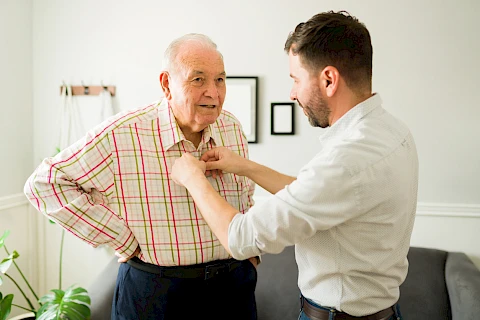
Needing help with bathing, dressing, using the bathroom, or grooming may bring embarrassment, frustration, sadness, or a sense of lost independence. These feelings may be difficult to express, especially when personal care has always been private. Knowing how to talk to senior loved ones about hygiene can make it easier to discuss changes in personal care without making the conversation feel intrusive or judgmental. How you offer assistance may also shape how a senior feels about the experience and their ability to choose their daily routine.
Ask Before Helping
Explain what you plan to do and ask permission before touching or beginning a task. A question such as, “Would you like help washing your hair today?” gives the senior a chance to respond rather than assuming assistance is needed.
Offer reasonable choices whenever possible. A senior may prefer a morning shower, a particular soap or towel, or to dress independently. Discuss personal care when they are comfortable and fully dressed, rather than raising concerns in the bathroom. Agreeing on preferences ahead of time may reduce discomfort later.
Protect Privacy
Close doors and curtains, and have towels, clothing, and other supplies ready before personal care begins. Keep the senior covered as much as possible, exposing only the area that needs attention.
Use a respectful, adult tone. Avoid joking about using the bathroom, incontinence, bathing, or other personal matters. Discuss these topics privately, not in front of relatives, visitors, or other people in the home.
Whenever possible, let the senior choose their personal belongings. Asking which clothes, toiletries, or grooming products they prefer preserves a sense of ownership over the routine.
Encourage Independence
Help with only the tasks the senior cannot safely complete alone. If someone can wash their face, brush their teeth, comb their hair, or choose an outfit, they may want to keep doing those things.
Give them enough time to finish without rushing. Standing nearby for balance or helping with difficult movements may be appropriate, while still letting the senior handle what they can.
Body language matters, too. Waiting for an answer, giving the person space while they dress, and avoiding unnecessary staring may communicate respect without words.
Respond With Patience
Accidents, spills, or difficulty completing a task may feel humiliating. Respond calmly and focus on what happens next. Avoid expressions of disgust, frustration, or surprise that could make the senior reluctant to ask for help in the future.
If a senior becomes upset, pause when it is safe to do so and ask what would make the situation more comfortable. Pain, dizziness, a sudden change in balance, or an unusual change in behavior may also warrant contacting a healthcare professional.
Needing personal care may bring grief over changes in ability. Giving seniors a voice in how care happens may help preserve their sense of identity and control.
Personal Care With Dignity
Personal care does not have to mean giving up personal choices. Respectful communication, privacy, patience, and opportunities for independence may make assistance feel less intrusive. When seniors have a voice in how care is provided, they may feel more comfortable expressing their needs and preferences.
Providing personal care every day may not always be practical for families. An in-home caregiver could assist with bathing, dressing, grooming, and other tasks while respecting the senior’s preferences. Senior Helpers Lincoln provides personal care services for seniors in Seward, Garland, Palmyra, Denton, and Milford. Contact us to discuss care options.