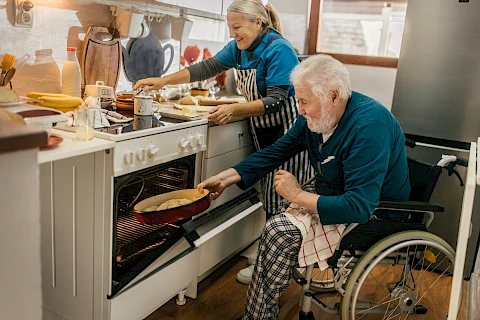
June is Safety Month, making it an ideal time for family caregivers to prepare a home for an elderly loved one. Doing a room-by-room safety walk is a practical step to ensure their environment is secure. You don't need a contractor or any special tools for this task. Keeping that in mind, Senior Helpers presents efficient senior home safety strategies to try.
Starting With Areas That Matter Most
Falls are the leading cause of injury-related emergency room visits among older adults, and most occur at home. Here are ways to get you started on the high-risk areas:
- Bathroom: This area is prone to serious falls. Install grab bars near the toilet and in the shower or tub if they aren't already installed. It's important to have a non-slip surface, so it’s best to remove loose rugs. Check the toilet height for comfort and consider a raised seat if needed.
- Bedroom: Is there a lamp near the bed that can be turned on easily? Is the path to the bathroom clear? Motion-activated night lights in the hallway can help if your loved one gets up at night.
- Kitchen: Frequently used items should be on accessible shelves. Ensure stove knobs are easy to read, and consider using safety covers if there's a risk of forgetting a burner is on.
- Stairs: Every staircase should have a secure handrail on at least one side. Ensure it's firmly attached. Make stair edges visible; use contrasting tape for hard-to-distinguish steps.
Broader Senior Home Safety Checklist
After the high-risk rooms, move through the rest of the residence. Here are some questions you can ask, and consider what to do next:
- Are pathways between rooms clear of cords, furniture corners, and other obstacles?
- Is lighting adequate in hallways and living areas, especially at night?
- Are smoke and carbon monoxide detectors present, functional, and tested recently?
- Are medications stored safely and organized so they can be easily found and identified?
- Are emergency numbers (including the caregiver's cell, the physician, and poison control) visible and accessible?
For seniors with mobility limitations, consider ramps, lever-style door handles, or a first-floor bedroom to ease access.
Adjusting Your Approach for Progressive Conditions
A space that is safe today may need reassessment in six months if your loved one has Alzheimer's, Parkinson's, or another progressive condition. Make periodic checks a habit, ideally every three to six months, rather than a one-time task. The CDC's STEADI program offers a free fall prevention checklist and toolkit that caregivers in Advance, Clemmons, and nearby areas find helpful. Condition-specific resources are also crucial; a caregiver with a parent who has Parkinson's will benefit more from targeted guidance than from a general checklist.
Care That Supports Your Safe Space
Senior home safety is only part of the picture. Consistent, attentive care plays an equally important role. Senior Helpers of Central NC partners with families in New London, Norwood, Richfield, Salisbury, and nearby communities to provide in-home healthcare tailored to individual needs and environment. Contact us to discuss how we can help your loved one stay secure in the residence this Safety Month and beyond.