Maintaining strong and healthy bones becomes more critical as we age. Bone health in seniors is crucial for their overall well-being and independence. Caregivers are integral in supporting older adults to keep their bones strong. Discover the impact of diet and nutrition on elderly osseous tissue health and learn practical dietary recommendations to help.
Bone Health in Seniors
Bone density refers to the amount of bone mineral in your bones. As we age, it naturally decreases, making bones more fragile. This decline can lead to conditions like osteoporosis, which makes bones brittle and more prone to fractures. Older adult with osteoporosis face greater risks of injury from falls, impacting their mobility and quality of life. Proactively managing musculoskeletal wellness is necessary to prevent these issues; diet is a significant part of that strategy.
Key Nutrients for Strong Bones
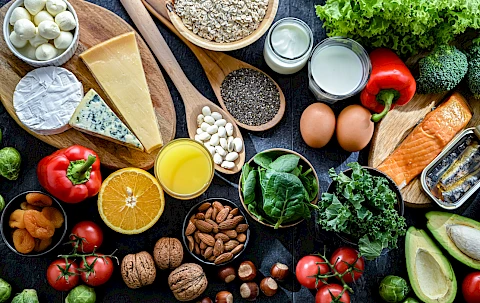
From calcium to Vitamin K, several nutrients are key to strong bones. With these nutrients consumed regularly, you should have strong bones.
- Calcium is crucial for bone strength. Seniors should include calcium-rich foods like dairy, leafy greens, and fortified cereals.
- Vitamin D aids calcium absorption; insufficient levels can lead to brittle bones. It can be obtained from fatty fish, egg yolks, and fortified foods. Sunlight also activates it within our bodies.
- Protein helps maintain muscle mass, which is vital for mobility. Seniors should consume protein from poultry, fish, nuts, and legumes.
- Magnesium and Phosphorus support bone mineralization. Good sources include nuts, seeds, whole grains, and dairy products.
- Vitamin K is vital for bone metabolism. Eating green leafy vegetables like spinach and kale can enhance vitamin K intake.
Dietary Recommendations for Older Adults
Maintaining a balanced diet with nutrient-dense foods to support the skeletal integrity of older adults. Regularly include calcium and Vitamin D-rich foods and various protein sources like lean meats, beans, and tofu. Incorporate magnesium and phosphorus-rich options as well.
Meal planning can help meet these dietary needs, so prepare meals beforehand. Water is essential for nutrient transport and can help prevent falls by reducing dizziness, so stay hydrated.
Practical Tips for Caregivers
Family carers can encourage healthy eating habits by providing varied and tasty meals. Monitoring dietary intake to ensure they get the necessary nutrients for bone health in seniors. Be aware of dietary restrictions or preferences, and adjust meal plans accordingly.
Working with healthcare providers can help develop personalized nutrition plans tailored to the needs of those over 55. They can offer valuable insight and guidance on managing skeletal integrity proactively.
Get Assistance From Senior Helpers Hattiesburg
Diet plays an instrumental role in maintaining bone health in seniors. By prioritizing nutrition, family guardians can help prevent bone-related issues and boost the well-being of their elderly loved ones. Senior Helpers Hattiesburg is here to assist if you're a carer needing support. Contact us today for professional in-home healthcare services in Laurel, Wiggins, Waynesboro, Ellisville, and Collins.