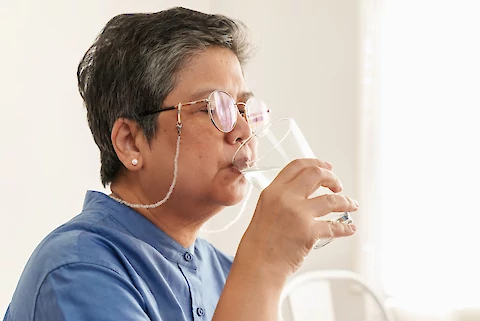
Feeling less thirsty is a normal part of aging, which is why so many older adults become dehydrated without noticing. The brain's thirst signal weakens over the years, so by the time a senior feels thirsty, their body may already be low on fluids. The fix is to stop relying on thirst and build drinking into the day on a schedule. In the hot, humid Mississippi summers around Hattiesburg and Gulfport, that habit matters even more.
Why Seniors Don't Feel Thirsty
Several changes work together. The part of the brain that triggers thirst becomes less sensitive with age, so the body needs to lose more fluid before the urge to drink kicks in. The kidneys also become less efficient at conserving water. Common medications, including diuretics, some blood pressure drugs, and laxatives, increase fluid loss. Conditions like dementia and stroke can make it harder to notice or act on thirst, and some seniors drink less on purpose to avoid trips to the bathroom.
Is It Normal Not to Feel Thirsty
For older adults, a reduced sense of thirst is common and expected. A complete lack of thirst at any age, called adipsia, is rare and usually linked to a brain injury or another medical condition. If a senior suddenly stops wanting to drink at all, seems confused, or has other new symptoms, contact their doctor.
Signs a Senior May Not Be Drinking Enough
Because thirst isn't a reliable warning sign, watch for other clues. These include dark yellow urine or urinating less often, dry mouth, headaches, tiredness, dizziness when standing, constipation, and new confusion. Severe dehydration can cause a fast heartbeat, fainting, and very little urine, which need medical attention right away.
Strategies to Stay Hydrated Without Feeling Thirsty
Drinking on a schedule works better than waiting for thirst. Many seniors find it easiest to tie drinks to daily routines, such as a full glass when waking up, one with each meal and medication, and one in the afternoon. A water bottle marked with times of day makes progress easy to see.
Keeping drinks within reach in every room the senior uses helps too. Flavored water, herbal tea, milk, and diluted juice give variety for anyone who finds plain water boring. Water-rich foods like watermelon, oranges, cucumbers, soups, and yogurt count toward daily fluids.
For seniors who limit drinks to avoid bathroom trips, it often helps to drink more during the morning and early afternoon and less in the two hours before bed. Sipping steadily through the day is easier on the bladder than drinking large amounts at once.
A gentle reminder from a family member or caregiver can make a big difference. A quick check-in at meals or a phone alarm set to go off every couple of hours keeps fluids on track without much effort.
How Much Fluid Seniors Need
There's no single number for everyone. Needs depend on body size, activity, health conditions, medications, and the weather. Hot, humid days and illness with fever, vomiting, or diarrhea all raise fluid needs. Seniors with heart failure or kidney disease may be told to limit fluids, so they should follow their doctor's specific guidance.
Help With Hydration and Daily Care in South Mississippi
Hydration is one of many small daily tasks that get harder with age. Senior Helpers Hattiesburg-Gulfport companion care caregivers offer drinks throughout the day, prepare meals, and give medication reminders, and personal care caregivers help with bathing, dressing, and mobility. Contact Senior Helpers Hattiesburg-Gulfport to learn more.