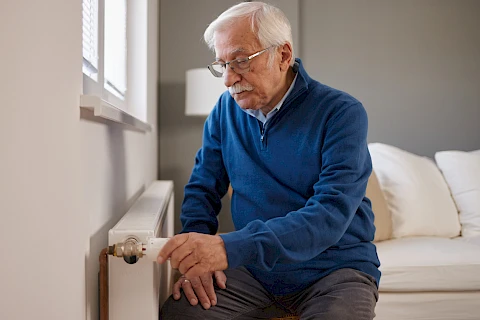
Most winter days on the Mississippi Gulf Coast are mild. That's exactly why heaters come out of the hall closet in a rush when a cold front finally blows through. That first chilly night is when dusty furnaces, dead alarm batteries, and old space heaters in winter cause trouble. An hour-long walk-through with your parent before December can catch most of it.
Test Every Alarm Together
Grab the step stool. Press the test button on each unit while your parent watches, so they can hear the sound. Anything silent gets new batteries.
Alarms also wear out with age. While you're already up on the step stool, look for the manufacture date printed on each one, because the National Fire Protection Association says alarms should be replaced ten years after they were made.
Carbon monoxide has no smell at all. The CDC's carbon monoxide poisoning page describes symptoms like headache, dizziness, weakness, and confusion, which can be mistaken for the flu in an older adult. Any home with gas appliances, a fireplace, or an attached garage needs a CO alarm on each level and near the bedrooms.
For a parent who's hard of hearing, ask about alarms with strobe lights or bed shakers.
Space Heaters in Winter Need Room
Plenty of Gulfport and Long Beach homes rarely need central heat, so portable heaters are common. The National Fire Protection Association's heating safety guidance recommends keeping anything that can burn at least three feet from a heater. That covers bedspreads and curtains, the stack of newspapers by the chair, and the recliner your dad likes to pull close on cold evenings.
Go through each heater with your parent:
- Plug it straight into a wall outlet, never an extension cord or power strip.
- Check the cord for fraying or heat damage.
- Make sure it shuts off on its own if it tips over.
- Turn it off before leaving the room or going to bed.
A unit with a cracked case or a burned smell belongs at the curb.
Furnaces, Fireplaces, and Generators
Furnaces need a yearly checkup. Have a qualified technician look over the furnace or gas heater before it gets heavy use. Fireplaces need a chimney check as well, and ashes go in a lidded metal can kept outside, away from the house.
Storms on the coast knock out power in every season, so generators deserve their own talk: one should never run a generator inside a home or garage, even with the door open, since exhaust builds up quickly. Charcoal grills and camp stoves stay outside, too. Never use an oven to heat a room.
Make a Plan They Can Follow
Keep the plan to one page and tape it inside a kitchen cabinet, next to the takeout menus. It should say what to do if an alarm sounds (get out first, then call 911 from outside), who to call about the furnace, and where the flashlights live. Practice two ways out together, and if they use a walker, clear the whole path from the bedroom to the door so nothing catches a wheel on the way.
Winter Safety Support Along the Coast
A chirping alarm or a space heater in winter pushed too close to the couch is easy to miss when you're not there every day. Senior Helpers Gulfport caregivers notice those things. They can also keep an eye on whether the house is staying warm enough. We visit older adults in Gulfport, Picayune, Bay St. Louis, Diamondhead, Kiln, Long Beach, Pass Christian, Pearlington, and Waveland. Before the first cold front, contact us and tell us about your parent's house.