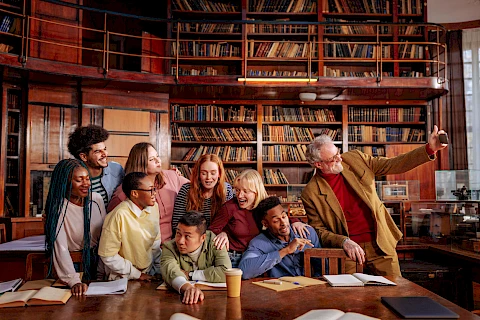
A retired teacher in Gulfport spends an hour a week helping a third grader sound out new words. Neither one is doing it out of obligation. Programs that bring older adults and younger people together for shared activities are becoming more common along the Gulf Coast, and the benefits seem to run in both directions.
What These Programs Actually Look Like
Intergenerational programs take many forms depending on the community that offers them. Some pairs older volunteers with students for reading or tutoring support, while others bring teenagers into senior living communities to teach basic technology skills such as video calling or online banking. Shared activity programs, where a high school art class collaborates with a group of older adults on a mural or garden project, are also gaining ground in towns like Long Beach and Pass Christian. A few churches and community centers in the Gulfport area run monthly potlucks that intentionally mix generations at every table.
The Research Behind the Idea
Studies on intergenerational contact consistently point to benefits for older participants, including reduced feelings of isolation and a stronger sense of purpose. Regular contact with younger people has also been linked to improved mood and even measurable cognitive benefits in some studies, since teaching or mentoring requires active engagement rather than passive time. Younger participants tend to walk away with more patience, better listening skills, and a different view of older adults than they had going in.
Mentoring Gives Structure to the Relationship
Formal mentoring programs, where an older adult meets with the same student regularly over a school year, tend to foster the deepest relationships because they're grounded in repetition and follow-through. A student who struggles with reading benefits from consistency, and the mentor gets the satisfaction of watching real progress over time rather than a single one-off visit. Several schools near Picayune and Bay St. Louis actively recruit older community members for this kind of ongoing support.
Shared Activities Lower the Pressure
Not everyone wants the responsibility of formal mentoring, and that's fine. Shared activity programs, cooking classes, gardening projects, or music groups that include both age groups offer connection without the structure of a mentoring commitment. These lower-pressure formats tend to appeal to people who want the social benefit without a long-term obligation.
Finding a Program Near You
Local libraries, senior centers, and school districts are usually the best starting points for finding intergenerational opportunities. Many programs run seasonally, so summer is often a good window to get involved before the school year fills back up with more rigid scheduling. Ask specifically about volunteer roles for older adults, since not every program clearly advertises them on its website.
A Relationship Worth Building
The exchange between generations tends to benefit everyone involved more than either group expects going in. For more on how social connection supports healthy aging, the National Institute on Aging has helpful resources worth a look.
If you live in Gulfport, Picayune, Bay St. Louis, Diamondhead, and surrounding areas, we can help you find a program that fits your interests. Contact Senior Helpers Gulfport, and we'll help point you in the right direction.