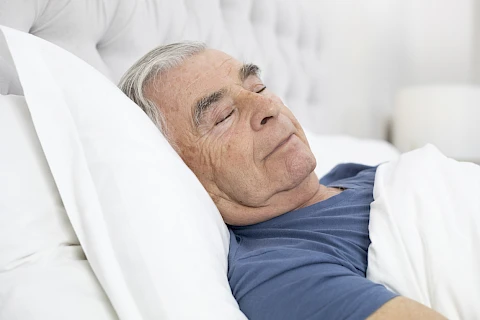
June is National PTSD Awareness Month. For many senior veterans and older adults who've lived through trauma, its effects on sleep are among the most persistent and exhausting aspects of the condition. Poor sleep doesn't just leave you tired. Over time, it chips away at mood, memory, and physical health in ways that compound other challenges. Learn the connection between PTSD and sleep and discover real strategies that can help.
How PTSD Disrupts Sleep
PTSD affects the nervous system in ways that make restful sleep genuinely difficult. Hyperarousal, the state of being on alert even when you're physically safe, keeps the brain from fully relaxing into deep sleep. Nightmares connected to traumatic memories can interrupt rest repeatedly through the night. Some people also experience hypnic jerks or startle responses that wake them at the lightest stage of sleep.
The result is often a cycle: poor sleep worsens anxiety and emotional reactivity, which then makes sleep harder the following night. Recognizing this pattern matters because it points toward solutions. According to the National Center for PTSD at VA.gov, sleep problems are among the most common concerns for people living with PTSD, and several evidence-based treatments address them directly.
Creating a Sleep Environment That Supports Rest
Your physical environment can do a lot of work here. On warm, humid nights in June, keeping your bedroom cool is especially helpful. A room temperature of around 65 to 68 degrees Fahrenheit supports deeper sleep cycles. Blackout curtains help if early light wakes you before you feel rested.
Consistent sleep and wake times, even on weekends, anchor your body's internal clock. If you're lying awake in bed for more than 20 minutes, get up and do something quiet in dim light, such as reading or listening to calm music, until you feel drowsy again. Staying in bed while anxious strengthens the association between bed and wakefulness, which works against you.
Limiting caffeine in the afternoon and reducing alcohol are worth trying. Alcohol may feel relaxing at first. However, it fragments sleep in the second half of the night, leaving you more tired than if you hadn't had it.
Strategies Worth Discussing With Your Doctor
Cognitive behavioral therapy for insomnia, called CBT-I, has strong evidence behind it for people with PTSD-related sleep problems. It is often more effective in the long term than sleep medication alone. Image rehearsal therapy is a technique for changing the content of recurring nightmares. It is another option your doctor or a VA-affiliated counselor can walk you through.
If you're in Waveland, Pearlington, or Bay St. Louis and connected with VA healthcare, ask your provider specifically about sleep programs. If you're not connected to the VA, your primary care doctor can refer you to a behavioral health specialist familiar with trauma and sleep.
Finding Rest and Support in Your Community
Better sleep is possible, and the steps to get there are worth taking one at a time. Senior Helpers of Gulfport provides in-home care and companionship for older adults across Kiln, Long Beach, Pass Christian, Pearlington, and Waveland. Our caregivers can provide overnight support, help establish calming evening routines, and simply be a steady, familiar presence. Contact us to learn more about how we can help you rest easier.